
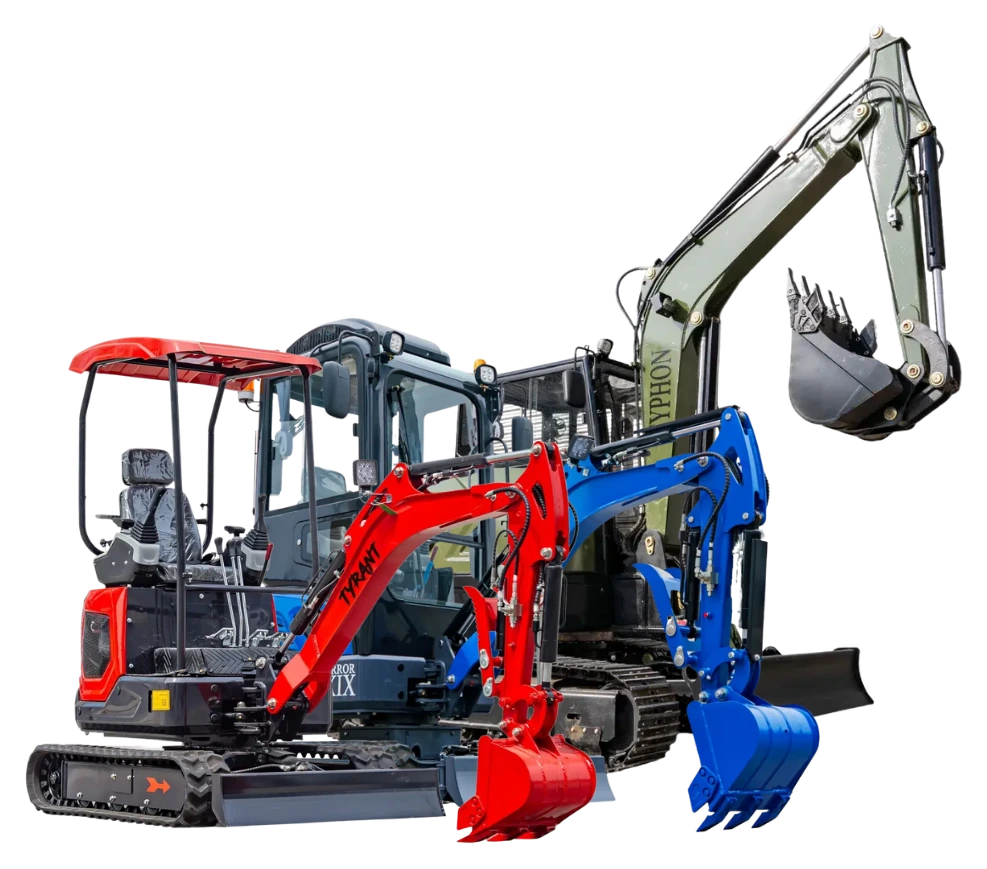
Mini Excavator Buying Guide: Sizing, Dig Depth & Attachment Selection
Selecting the right mini excavator is one of the most impactful capital equipment decisions a contractor, landscaper, or utility specialist will make. A properly sized compact excavator delivers high breakout force, tight-space maneuverability, and lower transport costs while opening up versatile attachment applications.
---
1. Understanding Machine Weight Classes
Mini excavators are generally categorized by operating weight:
---
2. Zero-Tail-Swing vs. Conventional Tail Swing
When working in confined urban environments, zero-tail-swing (ZTS) design is critical. In a ZTS machine, the upper rotating structure stays within the track width during a full 360-degree rotation. This eliminates the risk of counterweight collisions with building walls, fences, or adjacent traffic lanes.
Modern zero-tail-swing excavators incorporate compact bodies engineered for zero-tail or tight-tail clearance, giving operators confidence when digging alongside property boundaries.
---
3. Key Specifications to Evaluate
When comparing models, focus on verified functional metrics rather than marketing designations:
| Feature | 2.0 – 2.5 Ton Class | 2.6 – 3.0 Ton Class | Ideal Application | | :--- | :--- | :--- | :--- | | Operating Weight | 4,500 – 5,500 lbs | 5,600 – 6,500 lbs | 10k-14k GVWR Utility Trailers | | Maximum Dig Depth | 7.5 – 8.5 ft | 8.8 – 9.8 ft | Footings, Water/Gas Trenching | | Engine Class | 18 – 20 HP Diesel | 24 – 25 HP Tier 4 Diesel | Commercial Duty Cycles | | Breakout Force | 4,500 – 5,100 lbf | 5,200 – 5,800 lbf | Clay, Caliche & Compacted Rock | | Boom Offset | Standard Auxiliary | Boom Swing Offset | Parallel Trenching Against Walls |
---
4. Expanding Capability with Attachments
A mini excavator should not be restricted to simple trenching. Pairing your excavator with compatible attachments transforms a single carrier into multiple dedicated machines:
Explore our full Mini Excavator Attachments Catalog to view compatible tools.
---
5. Summary & Next Steps
When selecting your machine, always balance your deepest routine dig requirement against your towing capacity and access dimensions. For personalized fitment advice and freight delivery scheduling from our Commerce, California depot, contact our equipment specialists or review our Shipping & Delivery guidelines.