
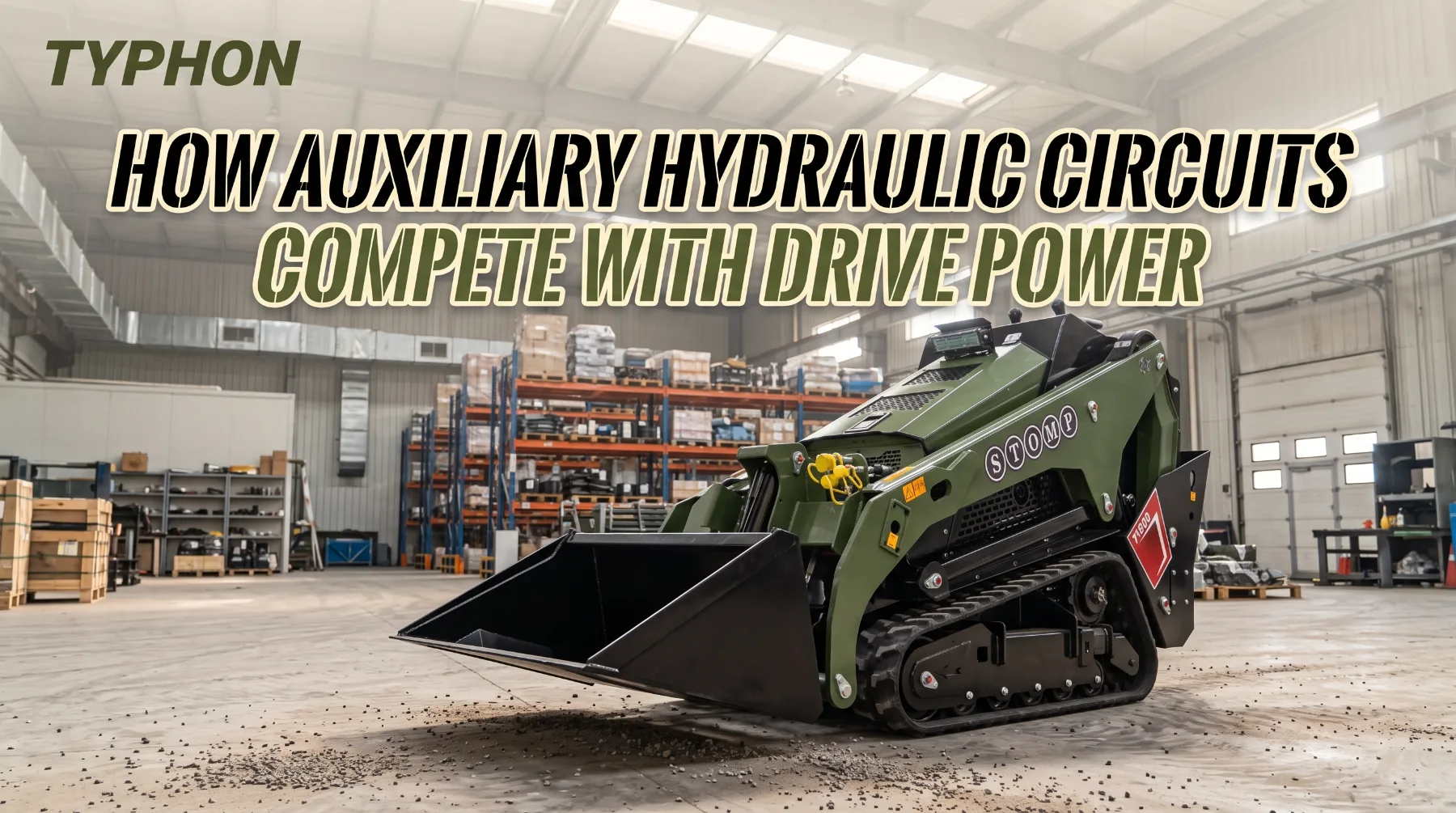
Buyers evaluating a skid steer often study attachment specs and travel speed as if they belong to separate systems. In truth, they draw from the same well. A single engine powers both the wheels or tracks that move the machine and the auxiliary hydraulics that run every attachment you bolt on the front. When an attachment demands heavy flow, that demand pulls directly against the power available to drive the machine. Understanding this rivalry is what separates a smart purchase from a machine that disappoints the moment you push it hard.
The tension rarely shows up on a spec sheet, yet it shapes daily performance more than almost any other factor. Drive power moves material and positions the machine. Auxiliary flow makes the attachment do its work. Both need engine output, and the engine has only so much to give. Here is how these two systems compete, what happens when the balance breaks, and how skilled operators keep the machine performing at its best.
What Auxiliary Hydraulic Circuits Actually Do
Auxiliary hydraulic circuits are the plumbing that carries pressurized oil from the skid steer's pump to whatever attachment sits on the coupler. Instead of driving only the lift arms and bucket tilt, these circuits route flow to couplers at the front of the machine, feeding motors and cylinders inside the attachment. That flow is what spins an auger bit, swings a brush cutter blade, or drives the drum on a cold planer.
Most skid steers offer a standard-flow circuit for lighter tools and a high-flow option for demanding ones. Standard flow suits attachments like augers, grapples, and basic sweepers that need modest oil volume. High-flow circuits deliver far more oil per minute, which heavy attachments such as mulchers, planers, and snow blowers require to run at full strength. The gap between these two ratings decides which attachments a given machine can actually power.
The key measures here are flow rate and pressure. Flow, expressed in gallons per minute, determines how fast an attachment's motor turns or how quickly its cylinders cycle. Pressure, measured in psi, sets how much force that motion can apply against resistance. An attachment underfed on either count runs sluggish or stalls, no matter how capable it looks in the catalog.
How Drive Power Works on a Skid Steer
Drive power on a skid steer is itself hydraulic. The engine turns a pump that sends oil to drive motors, and those motors turn the wheels or spin the tracks. This hydrostatic setup gives the machine its signature control, letting each side move independently so the skid steer can spin in place, creep forward under load, or push into a pile with steady force.
That pushing force is where drive power earns its keep. Tractive effort, the grip the machine applies through its wheels or tracks, lets it dig a bucket into packed material, climb a grade, or shove a full load across a site. Strong drive power means the skid steer keeps moving when the ground fights back, rather than spinning out or stalling against resistance.
Because the drive system runs on hydraulic flow just like the attachments, it competes for the same pump output. The engine cannot magically produce extra power the moment both systems ask for it at once. Every gallon of oil routed to the drive motors is a gallon unavailable to the front coupler, and that simple fact sets up the competition at the heart of this article.
Why the Two Systems Compete for Engine Output
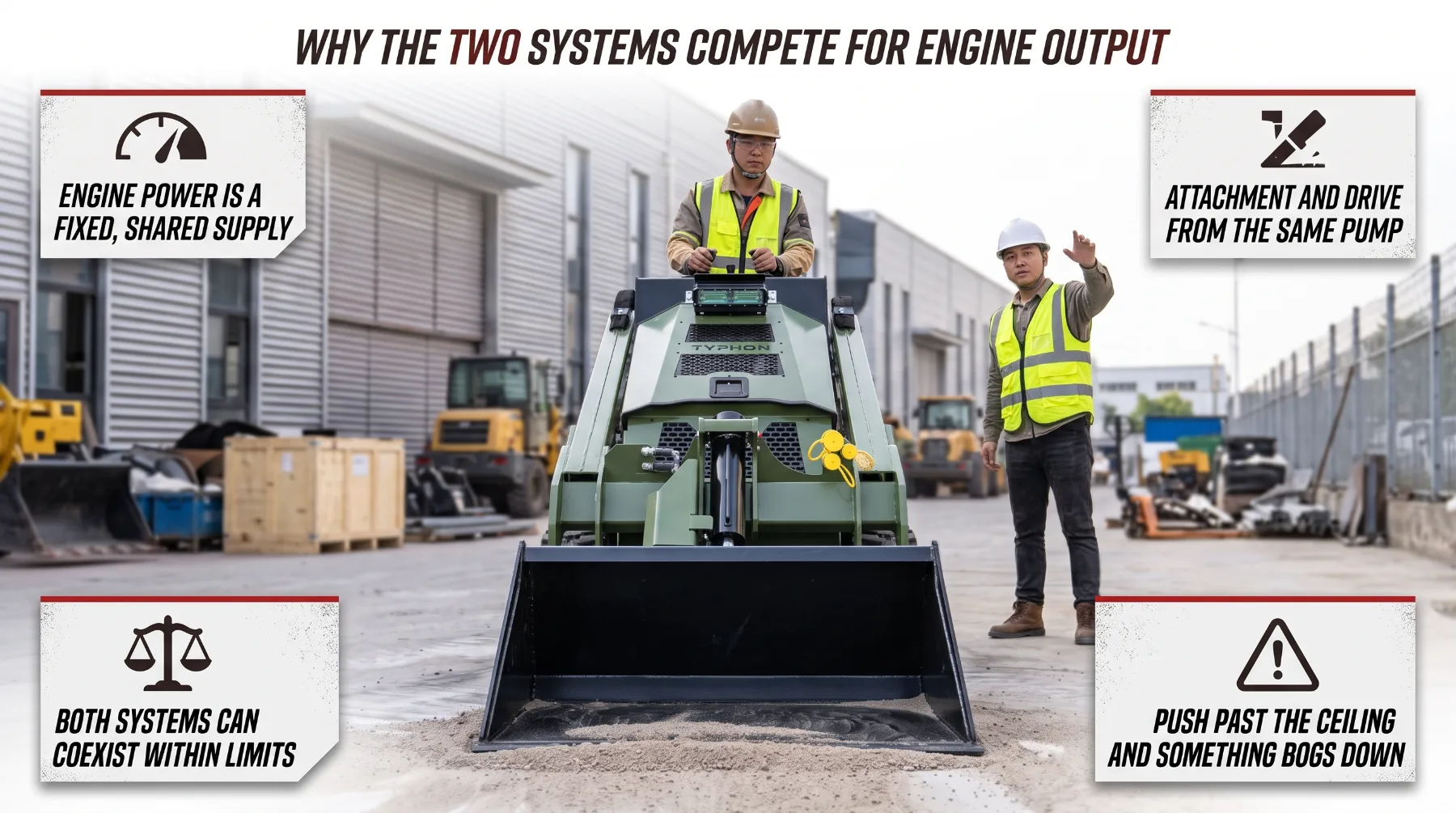
An engine produces a fixed amount of power, and the hydraulic pump can move only so much oil per minute at a given pressure. When an attachment and the drive system both call for flow simultaneously, they draw from that shared, finite supply. The machine has to divide its output between moving itself and running the tool, and neither request pauses to wait its turn.
This split matters most during tasks that demand both actions at once. Picture a cold planer grinding pavement while the skid steer inches forward, or a mulcher chewing brush as the operator advances into the growth. In these moments, the attachment wants heavy flow to keep cutting, and the drive system wants flow to maintain forward motion. The pump must satisfy both from the same reservoir of power.
https://img.miniexcavator.org/ebay/Blog/class5/3rdSep/SkidSteer-02.webp
When total demand stays within what the engine and pump can supply, the systems coexist without trouble. Push past that ceiling, and something has to give. The machine cannot manufacture output it does not have, so it sacrifices performance somewhere, either slowing the attachment, easing the drive, or bogging the engine as it strains to serve both. That ceiling is the real limit buyers should study, not the headline flow number alone.
What Happens When Attachment Demand Overwhelms Drive
When a high-flow attachment consumes most of the available oil, the drive system gets starved. The operator presses the controls to move forward, but the machine responds sluggishly because the flow it needs has been diverted to the front coupler. On a mulching job, this shows up as a machine that cuts aggressively yet crawls, unable to advance at a productive pace even though the blade spins fast.
The engine feels the strain directly. Faced with more hydraulic demand than it can meet, engine RPM drops as the load exceeds available power. This bogging slows every function at once, dragging down both the attachment and the drive. The operator hears the engine labor, feels the machine hesitate, and watches the work rate fall as the powerplant fights to keep up with commands it cannot fully answer.
Sustained overdraw carries costs beyond a slow shift. An engine held in this strained state burns more fuel and runs hotter, and the hydraulic oil heats up as it works past its comfortable range. Elevated temperatures thin the oil, reduce lubrication, and accelerate wear on the pump and motors. What starts as a performance annoyance quietly turns into higher operating costs and shortened component life.
How Operators Can Manage the Trade-Off
Skilled operators treat drive and attachment flow as a budget to spend deliberately rather than a resource to max out at once. The simplest habit is to avoid demanding full power from both systems at the same instant. Easing off forward travel while an attachment works hard lets the tool run at full strength, then advancing once the attachment clears its load keeps both functions strong in turn.
Matching the attachment to the machine's rated flow is the foundation beneath every technique. Running a high-flow tool on a standard-flow skid steer guarantees the competition tips against you, because the attachment alone can swallow the entire supply. Confirming that a tool's flow requirement sits comfortably within the machine's high-flow rating leaves headroom for the drive system to keep working alongside it.
Reading the machine's signals rounds out good practice. When engine RPM starts to sag or the attachment slows, that is the cue to reduce ground speed or lighten the cut before the engine bogs fully. Operators who respond to these early signs keep the powerplant in its efficient range, protect the hydraulic oil from overheating, and sustain a steady output that outpaces anyone forcing the machine past its limits.
Real-World Jobsite Implications
https://img.miniexcavator.org/ebay/Blog/class5/3rdSep/SkidSteer-03.webp
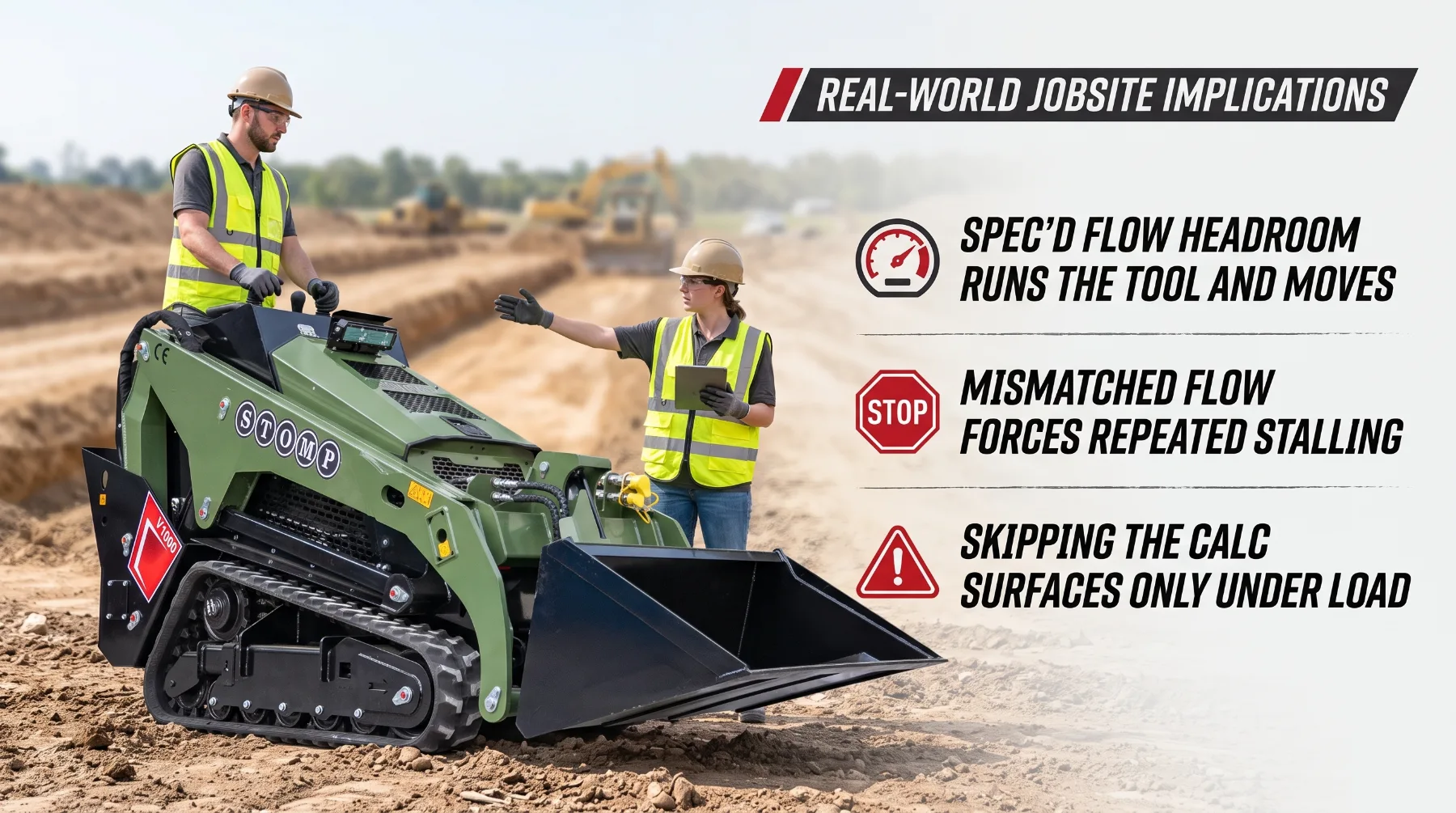
The competition between these systems reshapes how quickly jobs actually finish. On a land-clearing project, a skid steer matched well to its mulcher advances at a controlled pace while the head keeps chewing, clearing a lane in one confident pass. A poorly matched setup stalls repeatedly, forcing the operator to back off, let the engine recover, and creep forward again, stretching a morning's work into a full day.
Attachment selection decisions hinge on this balance long before the machine reaches the site. A contractor who understands the trade-off spec's a skid steer with enough flow headroom to run the heaviest planned attachment while still driving productively. Skipping that calculation leads to a machine that technically accepts the tool but cannot run it and move at the same time, a mismatch that surfaces only under real load.
Cost control follows the same logic across a season. A machine consistently pushed into overdraw burns extra fuel, cooks its hydraulic oil, and wears its pump and motors faster, driving maintenance bills upward and shaving resale value. A properly matched and skillfully operated skid steer runs cooler, sips less fuel for the work it completes, and holds its condition, turning the hydraulic balance into a lasting financial advantage rather than a hidden liability.
Conclusion
Auxiliary hydraulic circuits and drive power are not independent strengths to admire separately. They are rivals for the same engine output, and their true relationship reveals itself only when both demand power at once. A skid steer that balances the two runs its attachments at full strength while still driving with authority, finishing work faster, burning less fuel, and lasting longer because no part of the system strains beyond its limits.
Before choosing a machine or bolting on a new tool, look past the individual flow and travel numbers and ask how the two systems share the load. Match the attachment to the machine's rated flow, leave headroom for the drive, and operate with the competition in mind. The skid steer that manages this balance most cleanly is the one that will move the most material and power the most tools across years of dependable, cost-effective work.
Frequently Asked Questions
Why does my skid steer slow down when running a high-flow attachment?
The attachment and the drive system both draw from the same hydraulic supply, so a high-flow tool can consume most of the available oil. When that happens, less flow reaches the drive motors, and the machine crawls even though the attachment runs fast. If the demand exceeds what the engine can supply, RPM drops and everything slows together.
How do I know if an attachment is too much for my machine's hydraulics?
Compare the attachment's required flow and pressure against your skid steer's rated auxiliary output. If the tool needs more flow than the machine provides, or consumes nearly all of it, expect the drive system to starve. Watch for a bogging engine, sluggish travel, or an attachment that cannot maintain speed under load as clear warning signs.
Can running both systems at full power damage my skid steer?
Sustained overdraw does take a toll. Forcing the engine and pump past their limits raises hydraulic oil temperature, thins the oil, and accelerates wear on the pump and motors, while burning extra fuel and running the engine hotter. Managing the balance by easing travel when an attachment works hard protects both performance and the machine's long-term health.