
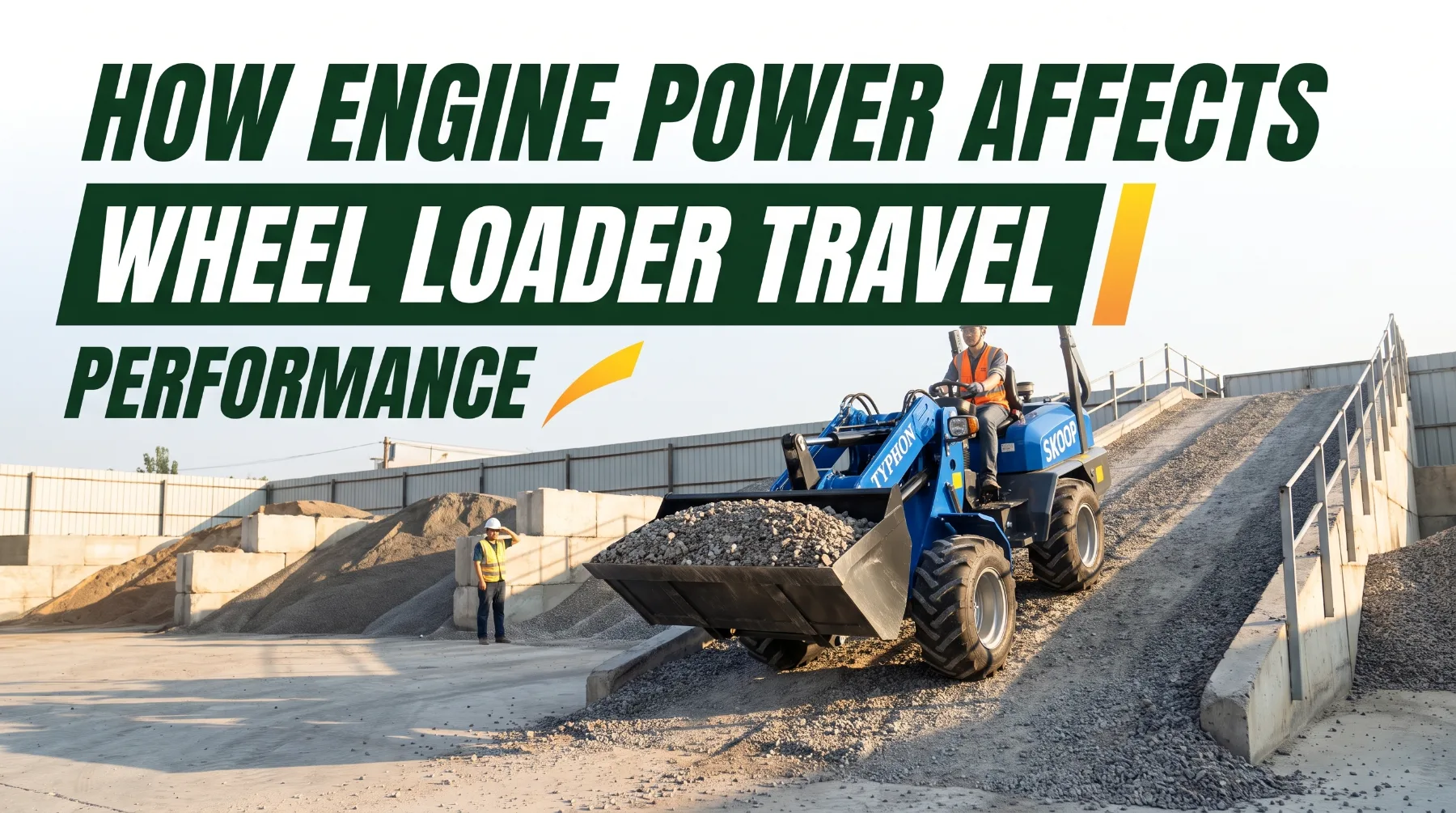
A wheel loader’s real working capability is determined by how effectively its powertrain converts available power into traction, hydraulic force, and productive movement. Bucket capacity and lift height show what the machine can handle, but they do not explain how quickly it can push into a pile, fill the bucket, or carry material across the jobsite. The engine supplies power to both the drivetrain and hydraulic system, so its ability to maintain output under combined loads directly affects pushing force, travel speed, breakout performance, and lift response.
During a typical loading cycle, the loader may be driving into a material pile, filling the bucket, lifting the boom, and repositioning at the same time. These operations place simultaneous demands on the powertrain and hydraulic circuit. If available output is insufficient, engine speed can fall, reducing torque delivery and hydraulic pump performance when the machine is working hardest. Understanding this interaction helps explain why two wheel loaders with similar bucket capacities can perform very differently under load, and why engine output, drivetrain performance, hydraulic capacity, and operating conditions should be evaluated together when selecting a machine.
How Engine Power Reaches the Wheels
A wheel loader’s ability to push, climb, and carry material depends on how its drivetrain manages the power produced by the engine. Unlike a conventional vehicle, the loader uses a torque converter between the engine and transmission to transfer power through hydraulic coupling. This arrangement allows the engine to continue operating as the loader meets heavy resistance at the pile, while the converter increases torque at low travel speeds to help maintain tractive effort.
Power then passes through the transmission, which determines the balance between travel speed and wheel torque. Lower gears provide the tractive effort needed for pile penetration and material loading, while higher gears favor faster movement between work areas. The engine provides the available power, but the torque converter and transmission determine how effectively that output reaches the axles. If the engine cannot maintain sufficient output under load, torque delivery and travel performance decline, limiting the loader’s ability to push into material and complete the loading cycle efficiently.
Why Underpowered Engines Lose Speed Under Load
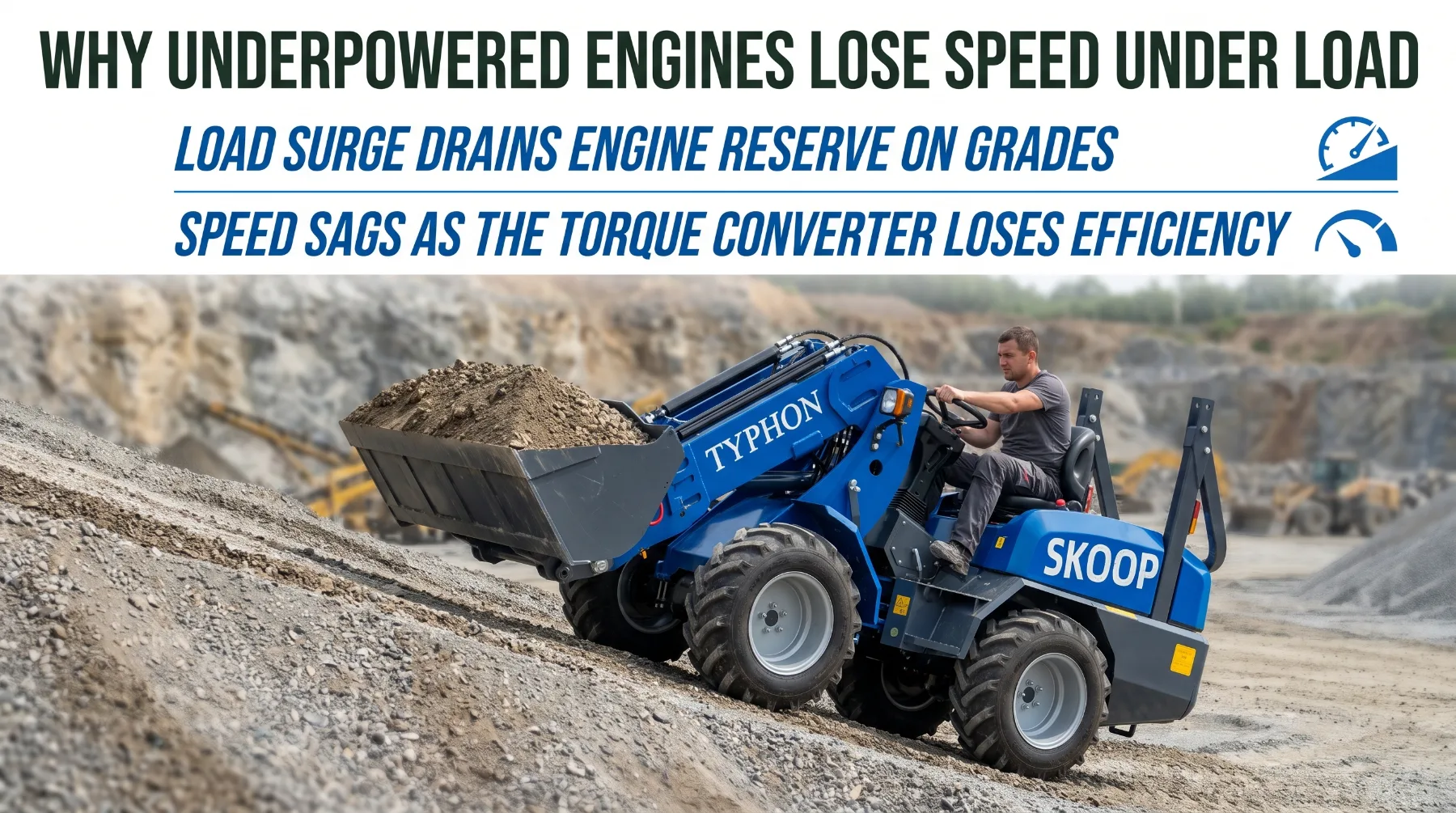
An undersized engine becomes more noticeable as the loader handles heavier loads at different reach positions. A full bucket placed farther forward puts greater demand on the lifting system and reduces the machine’s available load capacity. If the engine lacks enough power to handle this added demand, engine speed can drop and the loader may slow or lose lifting performance. This is why load capacity must be considered together with reach when choosing engine power.
Grades expose the shortfall most plainly. Climbing forces the engine to overcome both the machine's weight and the load in the bucket, and a marginal engine simply can't sustain the output the slope demands. The result is a loader that starts a ramp confidently and finishes it at a crawl, dragging out every haul cycle that involves elevation.
Heavy buckets punish a weak engine on flat ground too. Crowding into dense, packed material demands high tractive effort, and that effort traces straight back to engine power feeding the converter. The takeaway: when the engine can't hold its output under load, travel speed becomes involuntary, dictated by resistance rather than the operator, and the whole work rhythm suffers for it.
How the Power Split Between Travel and Hydraulics Shapes Performance
A wheel loader rarely performs one function at a time; during a typical loading cycle, the machine may crowd into the pile while the bucket curls and the boom lifts, placing simultaneous demands on both the drivetrain and hydraulic system. The hydraulic pump draws engine output to generate the pressure required for lifting and bucket control, while the torque converter must continue delivering tractive effort to maintain forward penetration. An engine with sufficient power reserve can support both demands without a significant drop in engine speed, allowing the loader to maintain pushing force and hydraulic response together. When engine capacity is marginal, however, available output must be divided between competing loads, often causing slower travel, reduced hydraulic response, or both. This directly lengthens the loading cycle, while a properly matched power source helps maintain consistent push, lift, and carry performance throughout repeated work cycles.
The Real Cost of Engine Strain on Productivity
Engine strain shows up first on the clock. A loader that slows on grades, hesitates during crowd-and-lift, or can't hold speed with a full bucket completes fewer cycles per hour. Across a shift, those lost seconds compound into loads left unmoved and trucks left waiting.
Operators adapt to a straining engine in ways that drag output down further. Sensing the machine labor, a careful operator takes lighter bucket loads, eases into piles, and slows on inclines to keep the engine from bogging. Each of those adjustments is sensible, and each one lowers the material moved per hour compared with a loader that never needed the compromise.
The gap widens on the toughest work, exactly where productivity matters most. If your loader consistently slows under load, the shortfall isn't an operator problem or a hydraulics problem; it's an engine that can't sustain the combined demand of travel and lifting, and it caps your throughput on every heavy cycle.
How Engine Strain Drives Up Fuel Use and Component Wear
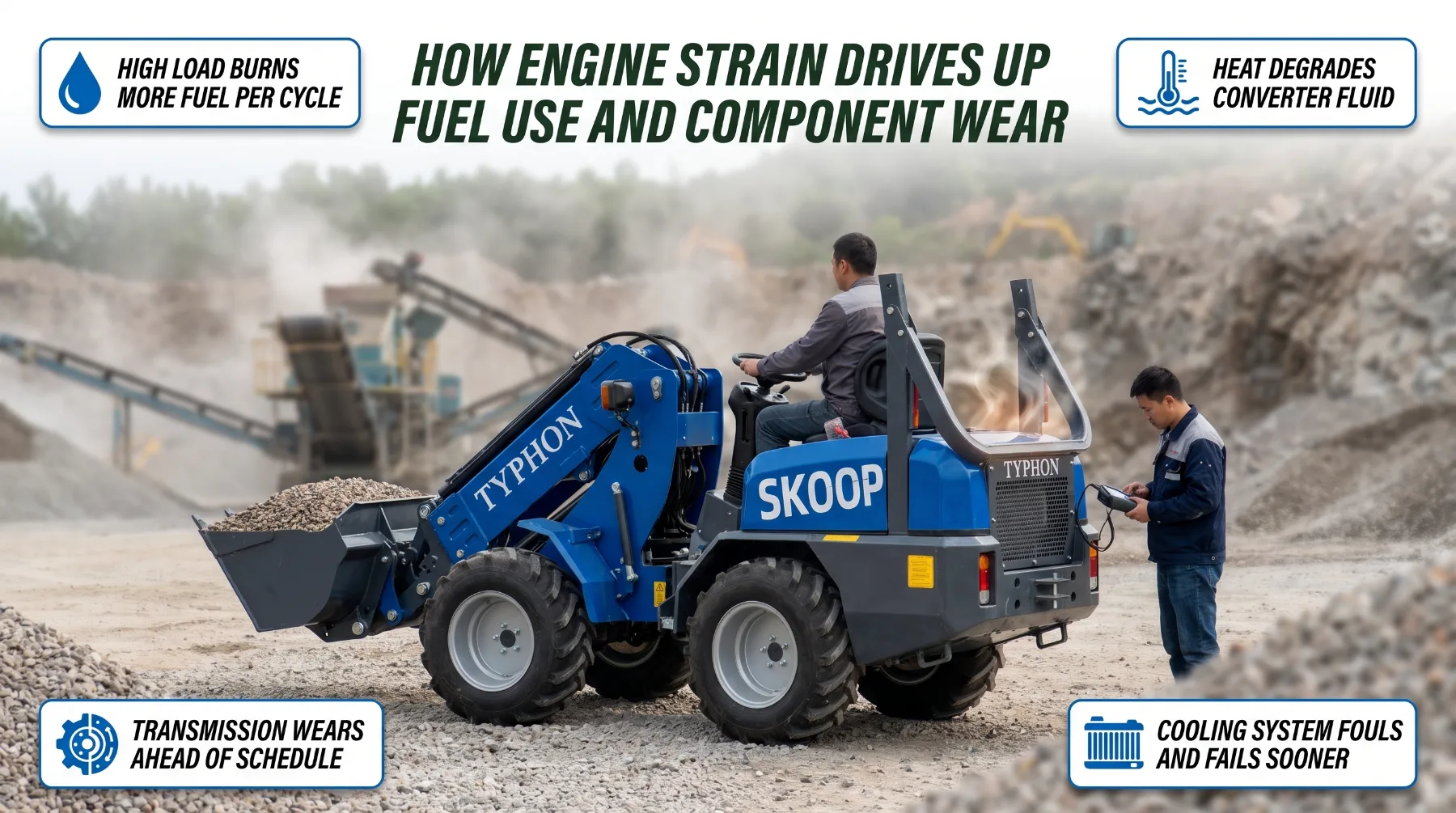
An engine held near its ceiling burns fuel inefficiently. Running at high load for extended stretches, it consumes more diesel for each bucket moved than an adequately powered engine working comfortably in its efficient range. Over a season of hard shifts, that difference lands squarely on the fuel bill.
Heat is the next penalty. A laboring engine runs hotter, and it pushes the torque converter and transmission fluid past their efficient temperature range. Hot converter fluid transmits power less effectively and breaks down faster, so the very component that multiplies torque for travel loses capability precisely when the machine needs it. The transmission and cooling system absorb the extra thermal load shift after shift.
Wear accumulates quietly across the driveline. Consider what chronic strain accelerates:
The bottom line: an engine matched to the work runs cooler, sips less fuel, and spares the driveline. An overtaxed one turns a modest specification gap into a steady drain on both fuel and maintenance budgets.
How Engine Output Affects Loader Travel Performance
Choosing the right engine starts with an honest look at the terrain and the material. If your site involves ramps, haul roads, or repeated grade climbs with a full bucket, you need enough engine reserve to maintain travel speed on those inclines, not just enough power to move across level ground. Sizing for flat terrain and hoping the machine handles the grade is how loaders end up crawling.
Look beyond headline horsepower to the specifications that reveal actual working capability. Rimpull, or tractive effort, shows how much force the loader can apply at the wheels, while hydraulic flow and pressure indicate how effectively the engine can support lifting and travel at the same time. A loader with balanced figures across these systems can maintain the dig-load-carry cycle more effectively than a higher-horsepower machine with a weaker driveline or hydraulic system.
The most reliable evaluation is to test the loader under conditions that resemble your daily work. Run it up your actual grades with a loaded bucket and observe whether it maintains speed while lifting and traveling together. If the machine stays responsive during a loaded climb and continues to deliver consistent performance under combined demand, its engine output is being converted into useful work rather than simply appearing as a larger number on the specification sheet.
Conclusion
Engine power isn't a background number on a wheel loader; it's the source that feeds both travel and hydraulics through the torque converter and transmission. When the engine holds its output under load, the loader climbs grades at speed, crowds into piles with full force, and lifts without sacrificing pace. When it can't, travel speed fades, cycles stretch, fuel use climbs, and the driveline wears ahead of schedule.
Before you buy or plan your next job, look past bucket size and headline horsepower. Weigh rimpull, hydraulic flow, and pressure together, match the engine to your grades and materials, and test the machine on the work it will actually do. A loader whose engine sustains both travel and lifting under real load is the one that moves the most material, at the lowest cost, for the longest service life.
Frequently Asked Questions
Why does my wheel loader slow down when climbing a ramp with a full bucket?
Climbing a grade forces the engine to overcome the machine's weight, the bucket load, and the slope all at once. If the engine lacks the reserve to meet that combined demand, its speed sags and the torque converter loses efficiency, so the loader slows even with the throttle held down. Consistent slowing on grades is a strong sign the engine is underpowered for your terrain.
How does using the hydraulics affect my loader's travel speed?
Travel and hydraulics draw on the same engine, so lifting or curling the bucket while crowding into a pile splits the available power between the two. An engine with ample capacity handles both at full force, but a marginal one must ration, causing either slower travel or sluggish hydraulics. A properly matched engine keeps full push and full lift working together throughout the cycle.
Can an underpowered engine increase my fuel and repair costs over time?
Yes. An engine run near its limit burns more diesel per bucket moved and runs hotter, pushing torque converter and transmission fluid past their efficient temperature range. That heat degrades the fluid, wears clutches and seals early, and strains the cooling system, so a small power shortfall compounds into higher fuel bills and faster driveline wear across the machine's life.