
How Scissor Lift Load Capacity Affects Lifting Speed
A scissor lift does not rise at the same speed under every load condition. As platform load increases, the lifting system must generate greater force to overcome the combined weight of the platform, occupants, tools, and materials. In hydraulic models, this increases the pressure required from the hydraulic pump and places greater power demand on the engine or electric motor. When the available hydraulic power is limited, heavier loads can reduce lifting speed and increase the time required to reach working height. Electric scissor lifts experience the same basic load relationship, with greater lifting demand drawing more current from the battery and potentially reducing available operating time.
Load management therefore has a direct effect on lift-cycle efficiency as well as safe operation. Keeping the platform load within its rated capacity allows the lifting mechanism, hydraulic system, motor, and structural components to operate within their designed limits while maintaining more predictable cycle times. Excessive or poorly distributed loads can increase lifting time, energy consumption, component stress, and the risk of instability. Matching the actual load to the lift's rated capacity and understanding how weight affects hydraulic or electric power demand helps maintain consistent lifting performance throughout the work shift.
How the Hydraulic System Powers the Lift
A scissor lift raises its platform through a hydraulic system, not a mechanical winch or gear. An electric motor or engine drives a pump, and that pump forces fluid into one or more hydraulic cylinders. As the cylinders extend, they push the scissor arms apart, and the platform rises.
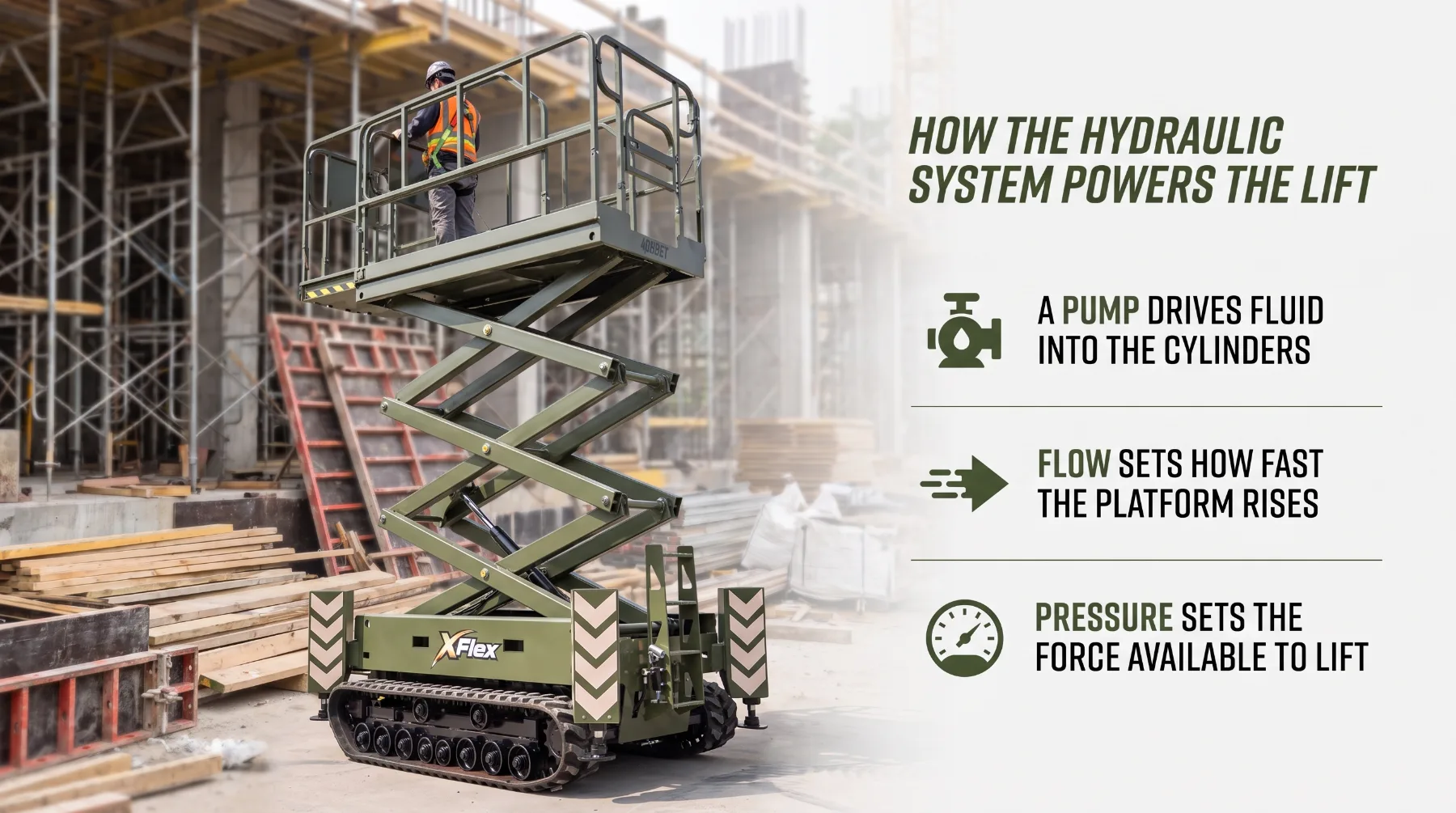
The speed of that rise depends on how fast fluid enters the cylinders, the flow rate, while the force available to lift depends on the pressure the pump can build. Flow sets speed; pressure sets lifting force. Both come from the same power source working against the same load.
Key takeaway: The platform rises as fast as the pump can move fluid into the cylinders, so anything that makes the pump work harder against the load affects lifting speed.
How Heavier Loads Increase Pressure and Slow the Lift
Load weight is pure resistance to the hydraulic system. A light platform meets little resistance, so the pump moves fluid easily and the platform rises quickly. Add weight, and the cylinders must push against far more force, which means the pump has to build higher pressure just to keep the platform moving.
Here's where speed comes in. The pump can only move so much fluid per minute at a given power output. When a heavy load forces the pump to spend more of its effort building pressure, less capacity is left to sustain flow, so the platform rises more slowly. The heavier the load, the higher the pressure demand, and the slower the lift.
What this means for you: A noticeable slowdown under a full platform is normal behavior, not a malfunction. It's the hydraulic system trading speed for the force it needs to raise the extra weight.
Key takeaway: Heavier loads raise hydraulic pressure demand, which leaves less pump capacity for flow, so the platform lifts more slowly as weight increases.
Rated Load Capacity and Speed Performance
Every scissor lift carries a rated load capacity, the maximum weight the platform is designed to raise safely. Manufacturers typically publish lifting speeds based on specific load conditions, and those figures assume the machine is working within its rating. As you load toward that maximum, expect the platform to rise more slowly than it does empty or lightly loaded.
Staying within the rated capacity keeps both speed and safety predictable. Push beyond it, and you don't gain speed. You lose it, while overstressing the hydraulics, straining the structure, and creating a serious safety hazard. Overloading is never a shortcut.
Why Rated Capacity Is a Speed Guide, Too
The rating isn't only a safety limit. It marks the range where the hydraulic system delivers the performance it was designed for. Load sensibly within it, and the machine lifts at a dependable pace. Crowd the limit on every cycle, and you'll feel the platform labor on each rise.
Key takeaway: Rated capacity defines the safe working range and the conditions behind published lift speeds, so loading within it keeps performance predictable and safe.
How Electric and Engine-Powered Lifts Respond to Load
Not all scissor lifts react to load the same way, because the power behind the pump differs.
Electric scissor lifts, common for indoor work, run the hydraulic pump off a battery-powered motor. They deliver smooth, consistent power, but that output has a fixed ceiling. As loads climb toward capacity, an electric lift often shows a clear, steady reduction in lift speed, and heavy loads draw more current, which shortens battery runtime across a shift.
Engine-powered lifts, typically diesel or gas rough-terrain machines built for outdoor use, generally offer more power in reserve. That headroom can help them hold lift speed better under heavy loads, since the engine has more output to feed the pump against high pressure. The trade-off is that they still slow under load, and running the engine harder to sustain speed burns more fuel.
In practice: Match the machine to the work. Electric lifts suit lighter indoor loads where their smooth, quiet, emission-free operation shines. Engine-powered lifts handle heavier outdoor loads with more reserve to keep cycles brisk.
Key takeaway: Electric lifts show a steadier speed drop and draw more battery under load, while engine-powered lifts carry more reserve to hold speed but burn more fuel doing it.
How Load Weight Affects Cycle Times and Productivity
A single slow lift seems minor. Multiplied across a shift, it reshapes your output. Each work cycle includes raising the platform, working at height, lowering, and repositioning, and load weight stretches the raise-and-lower portion of every one of those cycles.
Consider a crew running dozens of lift cycles a day. If a heavy load adds several seconds to each rise and descent, those seconds compound into minutes and then lost hours by week's end. The platform spends more time traveling and less time producing.
There's a tempting logic that loading the platform heavily means fewer trips overall. Often it backfires: an overloaded platform lifts sluggishly, strains the machine, and raises safety risk, so the time saved on trips is lost to slow cycles and added wear. A sensible load moving at a healthy speed usually wins the day.
Key takeaway: Heavier loads lengthen every lift cycle, and those seconds compound into real lost productivity, so a well-managed load often outperforms a maxed-out one.
Practical Tips to Manage Loads and Keep Lifting Efficient
You control more of your lift speed than you might think. A few deliberate habits keep the hydraulics working efficiently and the platform moving at a productive pace.
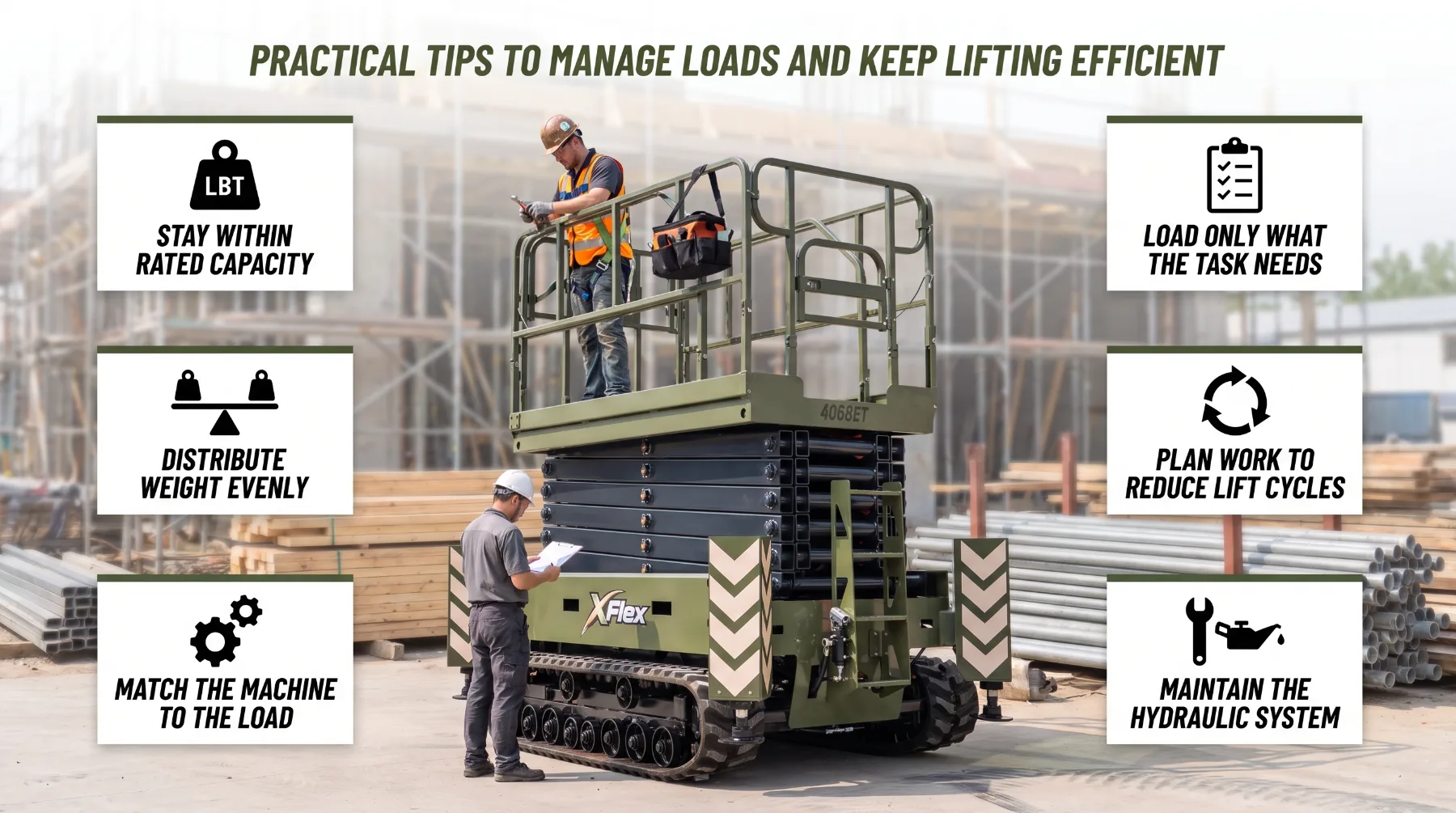
In practice: These steps cost nothing but attention, and together they recover a meaningful share of the speed and runtime that heavy, careless loading quietly drains.
Key takeaway: Loading sensibly, distributing weight, planning cycles, and maintaining the hydraulics keep lift speed strong without sacrificing safety or output.
Conclusion
Load capacity and lifting speed are closely related through the hydraulic system because increasing platform load raises the force required from the lift cylinders and therefore increases hydraulic pressure and pump power demand. For a given hydraulic pump and engine or electric power unit, higher pressure demand can reduce the available power margin for maintaining maximum flow, which may decrease platform lifting speed under heavy load. The actual relationship depends on pump displacement, available power, cylinder area, hydraulic efficiency, valve configuration, and system control strategy, so lifting speed should be evaluated at both rated and partial loads rather than treated as a fixed value. Operating near the rated platform capacity increases hydraulic and structural loading and can also raise thermal stress in the pump, motor, valves, and other components during repeated lift cycles. Exceeding the rated capacity can further affect stability, structural loading, braking, and control performance, making load compliance essential for safe operation. Machine selection should therefore consider rated platform capacity, maximum working height, lift time under load, hydraulic flow and pressure, power-unit output, duty cycle, and the typical payload encountered on the job. Efficient operation also requires loading only the necessary personnel, tools, and materials, avoiding unnecessary lift cycles, and maintaining hydraulic fluid, filters, cylinders, hoses, valves, and other components in proper condition. Matching the lift capacity and hydraulic performance to the expected workload allows the scissor lift to maintain consistent elevation performance while controlling component stress and supporting reliable service life.
Frequently Asked Questions
Why does my scissor lift raise the platform more slowly when it's loaded?
It comes down to how the hydraulic system works. The platform rises as the pump forces fluid into the lift cylinders, and lifting speed depends on how fast that fluid flows. A heavier load creates more resistance, so the pump must build higher pressure to raise it. Because the pump has a fixed power output, spending more effort on pressure leaves less capacity to sustain flow, and the platform rises more slowly. This is normal, expected behavior rather than a fault. The system is simply trading some speed for the extra force it needs to lift the added weight.
Will overloading my scissor lift make it lift faster or get more done?
No, and it's genuinely dangerous. Exceeding the rated capacity doesn't add speed. It forces the hydraulics to work even harder against more resistance, which slows the lift further while overstressing the pump, cylinders, and structure. It also creates a serious tip-over and failure risk. Any time you think you're saving by hauling a heavier platform, you lose it to sluggish cycles, added wear, and safety exposure. The productive and safe approach is loading within the rated capacity, where the machine delivers the lift speed it was designed for.
Do electric and engine-powered scissor lifts handle heavy loads differently?
Yes. Electric lifts run the pump off a battery-powered motor with a fixed power ceiling, so they tend to show a steady, noticeable drop in lift speed as loads approach capacity, and heavier loads draw more current and shorten battery runtime. Engine-powered lifts usually carry more power in reserve, which helps them hold lift speed better under heavy loads, though they still slow somewhat and burn more fuel when pushed. The best choice depends on your work: electric suits lighter indoor loads with clean, quiet operation, while engine-powered machines handle heavier outdoor loads with more reserve to keep cycles moving.