
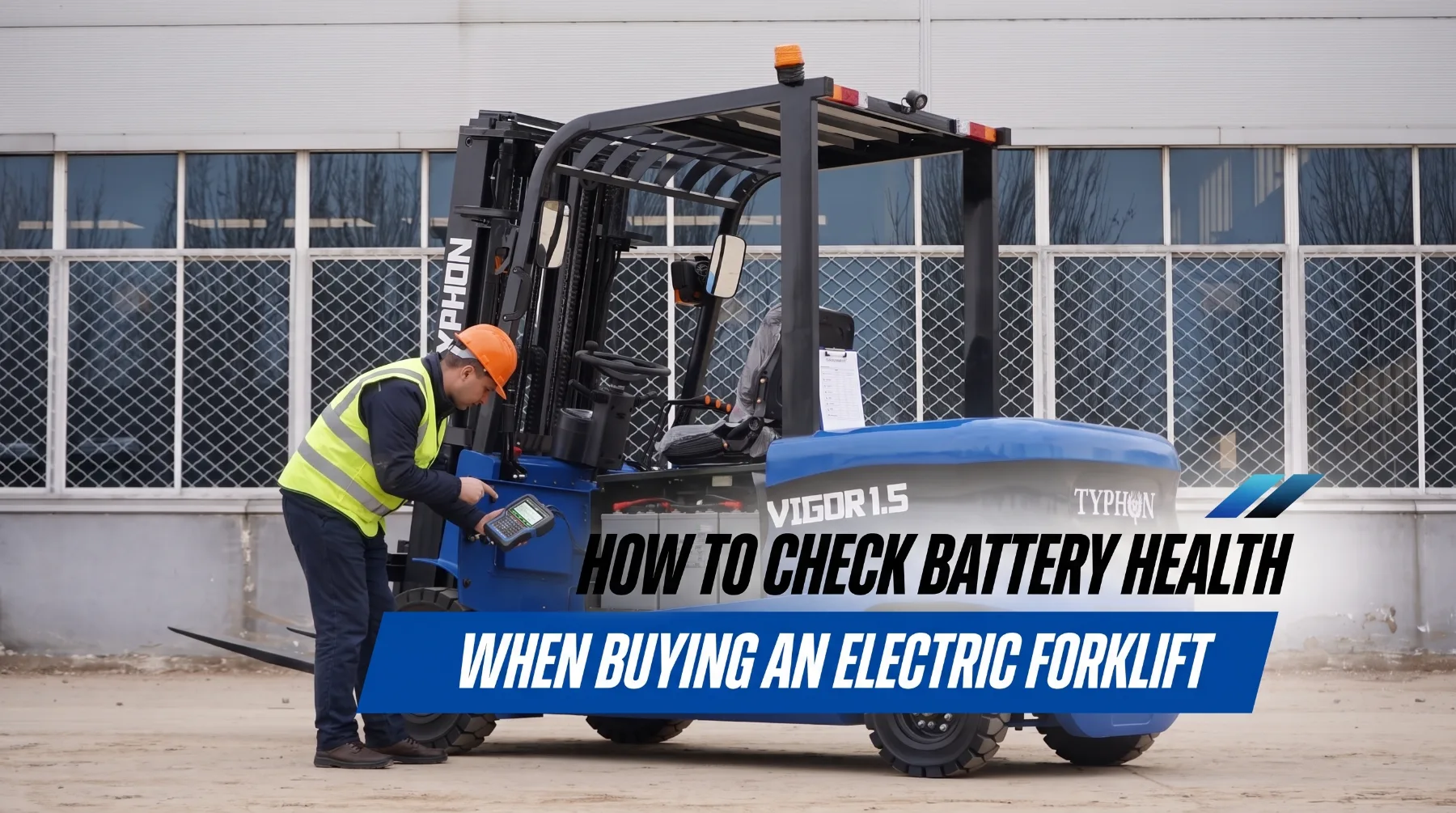
A buyer stands in a warehouse, keys in hand, ready to close on an electric forklift that looks clean, runs quiet, and lifts smoothly across the test floor. Everything seems right until a question surfaces that no shine can answer: how much life is left in the battery? On an electric forklift, the battery is not an accessory. It is the single most expensive component and the one that decides whether the machine works a full shift or quits halfway through the afternoon. A worn battery can cost as much to replace as a used forklift itself, so the health of that pack often matters more than the hours on the meter or the paint on the frame. Learning to check battery condition before you buy is what protects you from a machine that looks like a bargain and behaves like a liability.
The battery shapes nearly every part of an electric forklift's value, yet its true condition rarely shows on the surface. Knowing how to read the signs, interpret the data, and question the seller turns an uncertain purchase into an informed one. This guide walks through the checks that reveal what a battery has left to give.
Why Battery Condition Should Shape the Purchase
Value on an electric forklift concentrates in the battery to a degree that surprises many first-time buyers. Depending on the type and size, the pack can represent a third or more of the machine's total worth, which means a healthy battery and a failing one can sit inside two otherwise identical trucks and produce wildly different real prices. Judging the forklift without judging the battery leaves the largest part of the equation unexamined.
Performance flows directly from the state of the pack, so its condition governs how the machine behaves through a working day. A strong battery holds voltage under load, powers steady lifts, and carries the truck through a full shift without fading, while a degraded one loses capacity, sags under demand, and forces mid-shift charging that stalls productivity. The way a forklift performs at 3 p.m. tells you far more about the battery than the way it performs in the first ten minutes of a demonstration.
Cost extends well past the sticker whenever a battery nears the end of its life, and that hidden expense is what catches unprepared buyers. Replacement packs are costly, lead times can stretch for weeks, and a truck sidelined for want of a battery earns nothing while it waits. A buyer who confirms battery health before signing avoids inheriting a bill that can rival the price of the forklift, which is why the pack deserves the closest attention of any component on the machine.
Recognizing the Signs of a Degrading Battery
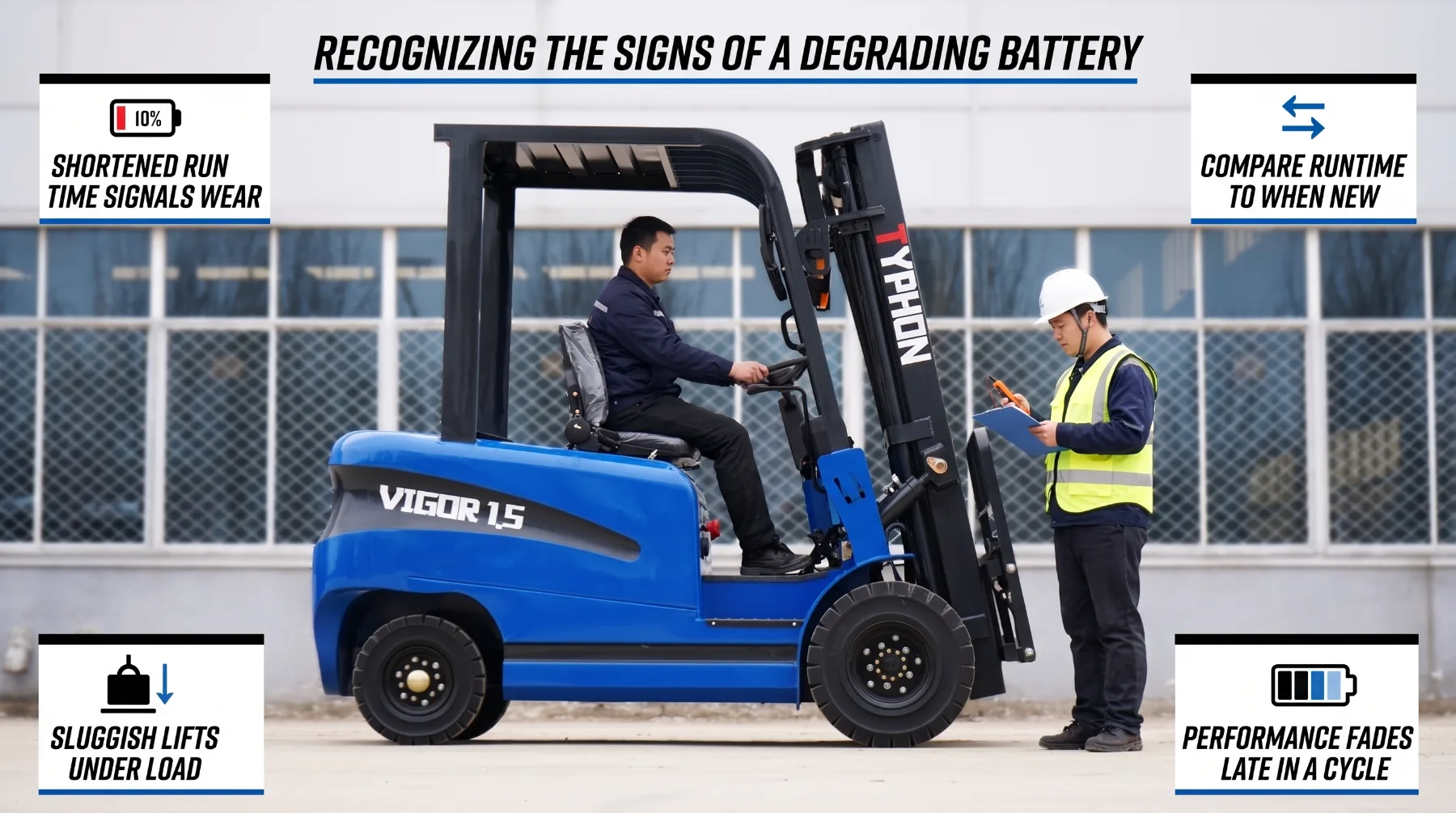
Capacity loss is the clearest symptom of a tired battery, and it reveals itself in shortened run time above all else. A pack that once powered a full shift but now needs a charge after a few hours has lost a meaningful share of its usable energy, and that decline rarely reverses. Asking how long the battery runs on a full charge, then comparing that answer to what the machine should deliver when new, exposes wear that no visual check would catch.
Sluggish performance points to trouble as well, since a weakening battery struggles to meet the sudden demands of lifting and traveling. Lifts that feel slow, hydraulics that hesitate under a heavy load, or a truck that loses pace late in a cycle all suggest a pack that can no longer push current the way it once did. These symptoms grow more pronounced as the charge drops, so a battery that feels fine at full charge but fades quickly is telling you its capacity has thinned.
Charging behavior offers another window into battery health, because a healthy pack accepts and holds a charge predictably. A battery that charges unusually fast may be holding far less energy than its rating suggests, while one that runs hot during charging or refuses to reach a full state signals internal wear. Watching how the pack charges, and how warm it becomes while doing so, adds a layer of insight that pure appearance cannot provide.
Reading the Battery Management System Data
Modern lithium-ion forklift batteries carry a battery management system that records the pack's history and current state, and that data is one of the most honest sources a buyer can consult. The BMS tracks charge cycles, temperatures, voltages, and faults over the life of the pack, so accessing its readout replaces guesswork with a documented account of how the battery has lived. Any seller of a lithium machine should be able to produce this information, and a reluctance to share it is worth noting.
State of health is the figure that matters most on a BMS readout, since it expresses the battery's current capacity as a percentage of its original capacity. A pack reading near its full rating has plenty of life ahead, while one that has dropped well below suggests the battery is entering its final stretch. Reading this single number gives you a fast, reliable sense of where the pack sits in its lifespan without relying on the seller's description.
Cycle count and fault logs round out the picture the BMS provides, adding context that a lone capacity figure cannot. The cycle count shows how many times the battery has been charged and discharged, which hints at how hard the pack has worked relative to its rated life. Fault records reveal whether the battery has suffered overheating, deep discharges, or cell imbalances that shorten its future. Studying these entries together tells you not just how much capacity remains but how well the battery has been treated on the way there.
Inspecting the Battery in Person
Physical examination remains essential even when the data looks clean, because some problems show themselves only to the eye and hand. Begin with the case and terminals, looking for cracks, swelling, corrosion, or residue that hint at leaks, overheating, or neglect. A bulging case on a lithium pack is a serious warning, while heavy corrosion on a lead-acid battery's terminals suggests poor upkeep that likely extended to the cells themselves.
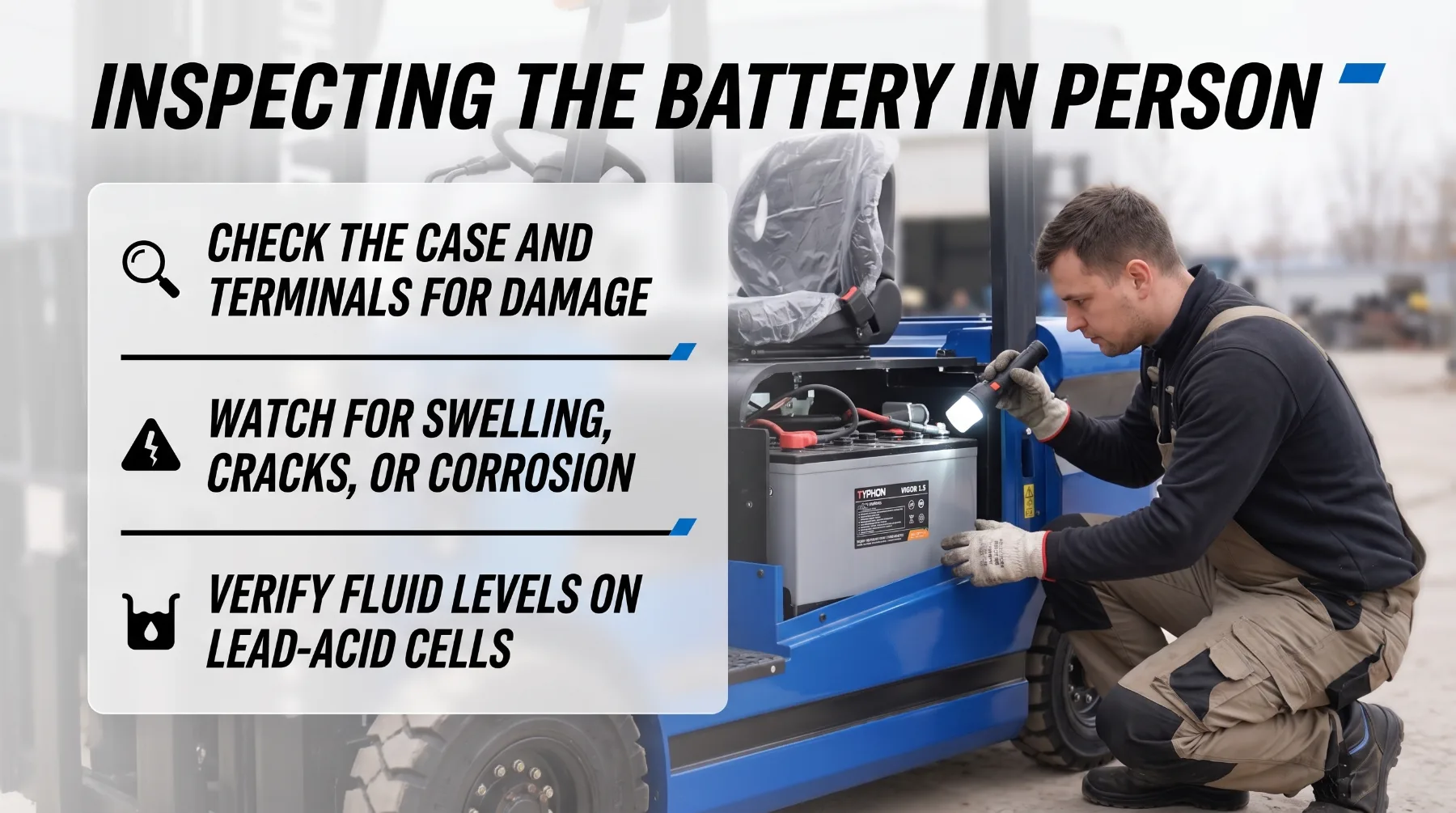
Fluid levels and cell condition demand attention on lead-acid batteries, since these packs rely on proper electrolyte to function. Low or uneven fluid across the cells points to inconsistent maintenance, and dry cells can indicate permanent damage. Checking the electrolyte, where the battery type allows, and noting whether the levels look uniform gives you a read on how carefully the previous owner tended the pack.
Connections and cabling deserve a close look as well, because a healthy battery undermined by poor wiring still delivers poor performance. Loose connectors, frayed cables, scorched contacts, or makeshift repairs all suggest a machine that has been patched rather than maintained. Running your eye along the cabling and giving the connectors a gentle check confirms that the power the battery holds can actually reach the motor and hydraulics without loss or risk.
Load Testing the Battery Under Real Demand
Testing under load separates a battery that looks healthy from one that truly is, because a pack reveals its weaknesses only when asked to work. A battery can show a full charge at rest and still collapse the moment it faces a real demand, so a stationary reading tells only half the story. Putting the machine through genuine work is the surest way to expose a pack that has lost its strength.
A practical load test puts the forklift through the tasks it will face on the job rather than a gentle roll across the floor. Lifting a heavy load to full height, holding it, traveling with it, and repeating the cycle several times pushes the battery to deliver sustained current the way a real shift would. Watching whether the machine holds its performance through these cycles, or fades as the demand continues, shows you how the pack behaves when it matters.
Voltage stability under load is the detail to watch throughout the test, since a strong battery holds its voltage while a weak one sags. A noticeable drop in lift speed, hydraulic power, or travel pace during the test signals a pack that cannot sustain output, even if it charged to full beforehand. Ideally the test runs long enough to draw the charge down partway, because many batteries perform acceptably at full charge and reveal their true condition only as the state of charge falls.
Reviewing Charge History and Maintenance Records
Charge cycle history tells the story of how hard a battery has worked, and that story shapes how much life the pack has left. Every battery carries a rated number of cycles it can endure before its capacity meaningfully declines, so knowing how many cycles the pack has already used places its remaining life in context. A battery well within its cycle rating has room to run, while one approaching or past that figure is living on borrowed time regardless of how it looks. This information also supports safe operation by helping operators avoid relying on a battery that may no longer deliver consistent performance.
Maintenance records add weight to the cycle count, because a battery cared for on schedule outlasts one that was ignored. Documentation of regular watering on lead-acid packs, proper charging practices, and any servicing or cell replacements shows a pattern of stewardship that bodes well for the pack's future. A machine that arrives with a clear paper trail earns more confidence than one whose history exists only in the seller's memory.
Charging habits during the battery's life influence its condition as much as the raw cycle count, so it pays to ask how the pack was routinely charged. Lead-acid batteries suffer from frequent partial charges and skipped equalizing, while any battery degrades faster when charged in high heat or discharged too deeply too often. Understanding the routine the battery lived through helps you judge whether the cycle count understates or overstates the wear the pack has actually absorbed. Following proper charging practices not only protects battery life but also contributes to safer operation throughout the machine's working cycle.
Conclusion
The battery decides the real value of an electric forklift, so checking its health is the single most important step in buying one with confidence. Start by recognizing why the pack drives both performance and cost, then learn to spot the signs of degradation in run time, responsiveness, and charging behavior. Read the battery management system for state of health, cycle count, and fault history, and back that data with a hands-on inspection of the case, cells, and connections. Put the battery through a genuine load test, review its charge history and maintenance records, and ask the seller direct questions while watching for the red flags that signal a pack near its end. Work through these checks in order, and you replace hope with evidence, buying a forklift powered for the work rather than one destined for an early and expensive battery replacement. Before you close on your next electric forklift, confirm the battery's condition with the same rigor you would apply to the machine itself, and lean on a trusted equipment specialist when you need help reading the results.
Frequently Asked Questions
How much life should I expect from a used electric forklift battery?Battery life depends on the type, usage, and maintenance. Lead-acid batteries often last around 5–7 years, while lithium-ion can last significantly longer. Check remaining capacity, cycle count, and battery condition rather than age alone.
Can I test battery health without special equipment?Yes. Test the forklift under load and watch for performance loss as the charge drops. Also inspect the battery, terminals, cables, and maintenance records. For a more accurate assessment, have a technician perform a capacity or discharge test.
Is a lithium-ion battery always a better choice than lead-acid when buying used?Not always. Lithium-ion offers longer life, faster charging, and less maintenance, while lead-acid can be a good value for single-shift use. Focus on the battery’s condition, remaining cycles, and how well it matches your operation.