
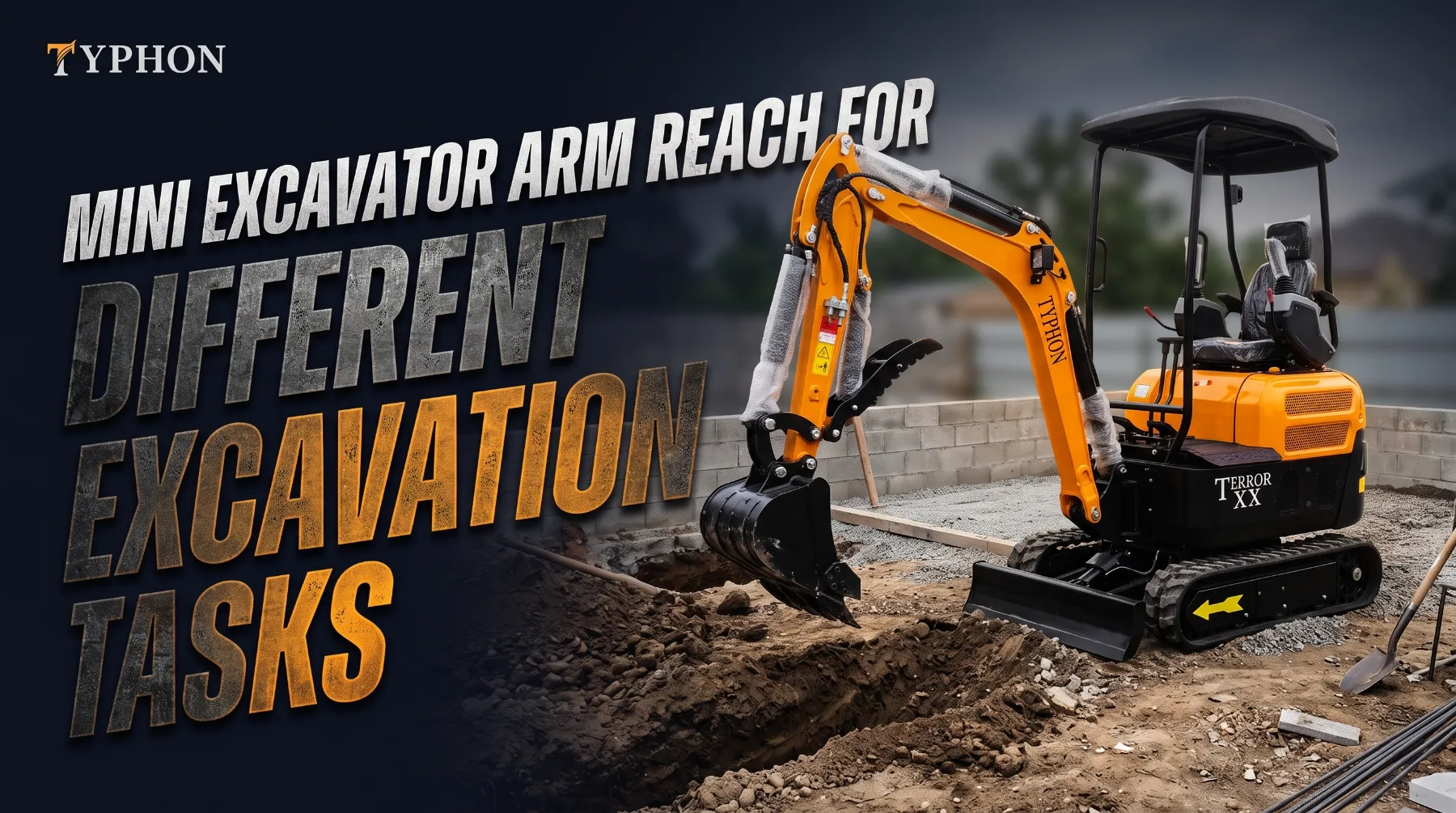
A utility contractor arrives at a residential job with a long punch list: a water line trench along the side yard, a leveled pad for a new shed out back, and a footing dig tight against the existing house.
The crew unloads a compact mini excavator, and the operator sizes up the first task with a practiced eye. The trench runs long and straight, so the machine can sit and dig a good stretch before crawling forward. But the footing work near the foundation is a different animal, calling for careful reach into a corner where the tracks cannot follow.
On a job like this, the length of the arm decides how smoothly the day unfolds, how often the machine repositions, and whether the operator fights the geometry or works with it. That quiet influence of arm reach over every dig is exactly what turns a good machine choice into a productive one.
Understanding arm reach on a mini excavator is what lets you match a machine to the work it will actually face, because the same reach that flies through one task can hobble another.
Getting it right protects your productivity, your schedule, and the quality of the finished dig, while keeping the operator working comfortably rather than straining the machine.
Why Reach Shapes Every Dig
Reach is the quiet specification that decides how much a mini excavator can accomplish from a single position, because the arm defines the envelope in which the machine actually works.
Every task lives somewhere inside that envelope, whether it sits deep below the tracks, far out in front, or off to one side, and an arm that comfortably covers the work lets the operator dig without constantly chasing the target.
A machine whose reach falls short of the job forces awkward angles, extra moves, and compromises that show up in both speed and quality.
Comfort at the controls follows directly from having the right reach for the task, since an operator working within the arm's natural range applies smooth, controlled motions rather than stretching the machine to its limit.
When the arm strains at full extension for every scoop, the operator loses precision and the machine loses stability, so reach that suits the work keeps both steady.
That ease translates into cleaner digs and fewer mistakes over a long shift.
Outcomes on the finished job trace back to reach more often than operators realize, because the arm's range influences the shape, depth, and accuracy of everything it touches.
A trench held to a consistent line, a pad graded flat, or a footing cut clean all depend on an arm that can hold its work within a comfortable span.
Key takeaway: Arm reach defines the working envelope of a mini excavator, shaping the comfort, precision, and quality of every dig, which is why reach shapes the outcome of the job.
How Depth and Horizontal Reach Work Together
Two measurements describe an excavator's reach, and they pull in different directions across the same arm.
Maximum dig depth tells you how far below the surface the bucket can cut, while maximum horizontal reach tells you how far out from the machine the arm can stretch at ground level.
Both matter, but rarely in equal measure on any given task, so reading a machine's specifications means understanding what each figure delivers and where it applies.
Geometry links the two numbers in a way that rewards operators who grasp it, because the arm cannot deliver its full depth and its full horizontal reach at the same instant.
Extending the arm far out to the side trades away digging depth, while cutting straight down near the machine sacrifices horizontal distance, so the practical reach at any moment depends on the angle the operator works.
A dig that needs both great depth and long reach at once asks more of the arm than a single specification suggests.
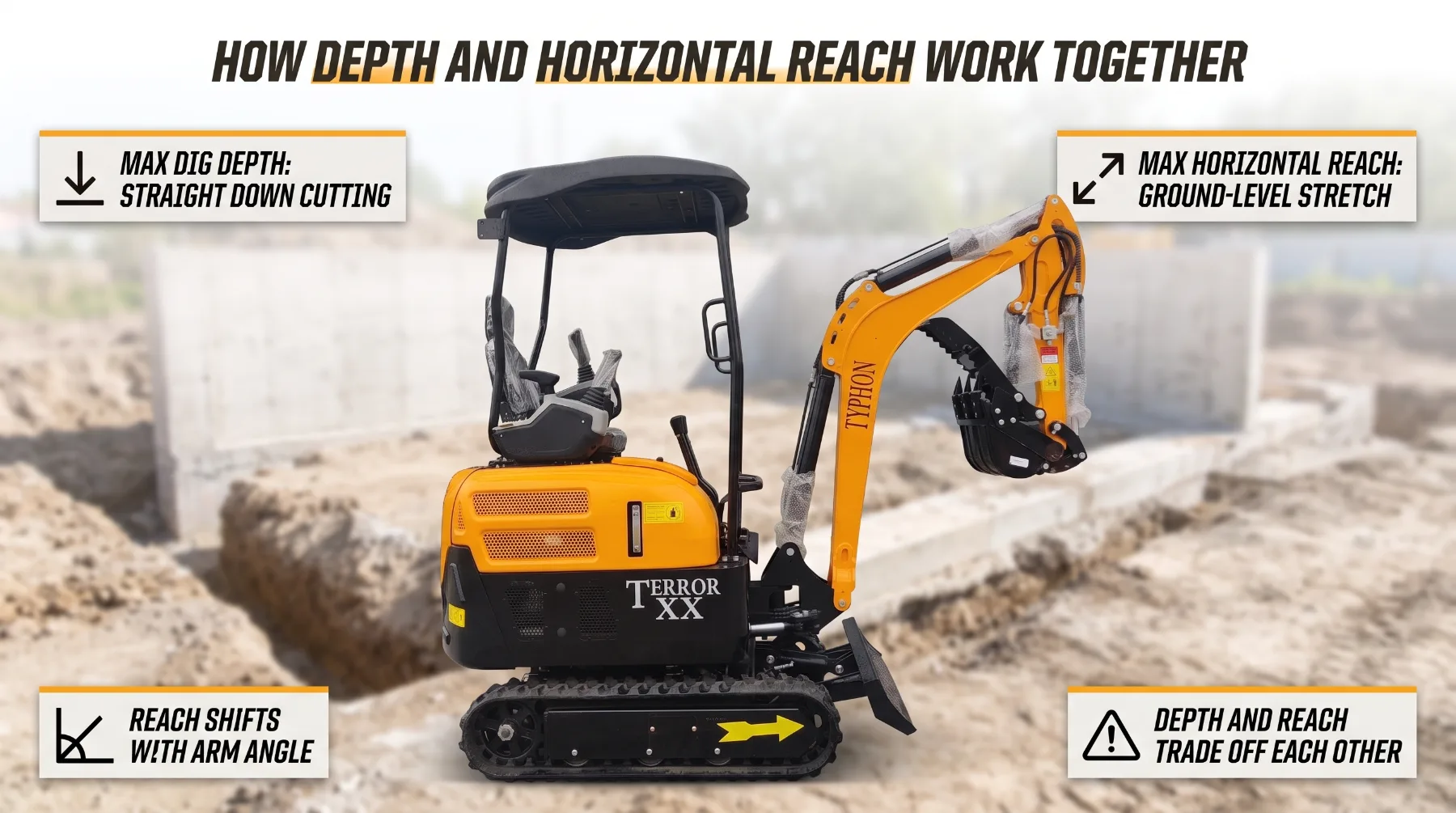
Application of these figures is where the theory meets the trench, and matching them to the task keeps expectations honest.
A deep, narrow footing leans on dig depth, a wide grading pass leans on horizontal reach, and a job demanding both may need a larger machine or more frequent repositioning to cover the ground.
What this means: Dig depth and horizontal reach describe different halves of the arm's capability and trade against each other in practice, so reading both together tells you what the machine can truly do on a given task.
Short-Arm Versus Long-Arm Configurations
Configuration choices give many mini excavators two personalities, since manufacturers often offer the same base machine with either a standard short arm or an extended long arm.
The short arm keeps the bucket closer to the machine and delivers greater breakout force and a sturdier feel, while the long arm stretches the working envelope farther out and deeper down at some cost to raw digging power.
That single option changes how the machine handles a wide range of tasks.
Short-Arm Configuration
Short-arm setups earn their place on work that demands strength and precision over distance, because a shorter arm concentrates the machine's power into a tighter, more controllable range.
Heavy digging in dense soil, careful work in confined quarters, and tasks where breakout force matters more than reach all favor the short configuration, which keeps the load close and the machine stable.
Operators who prize control and muscle over span tend to reach for this setup.
Long-Arm Configuration
Long-arm setups shine when distance and depth outweigh brute force, since the extended arm covers more ground from each position and cuts deeper trenches and slopes.
Reaching over obstacles, digging deep utility lines, and grading a wide area with fewer moves all reward the longer configuration, provided the operator accepts the slight loss of power and the shifted balance that extra length brings.
Key takeaway: Short arms deliver force and control in a tight range while long arms deliver reach and depth across a wider envelope, so the configuration you choose follows whether your work prizes power or span.
Reach Needs for Trenching, Grading, and Foundation Work
Trenching
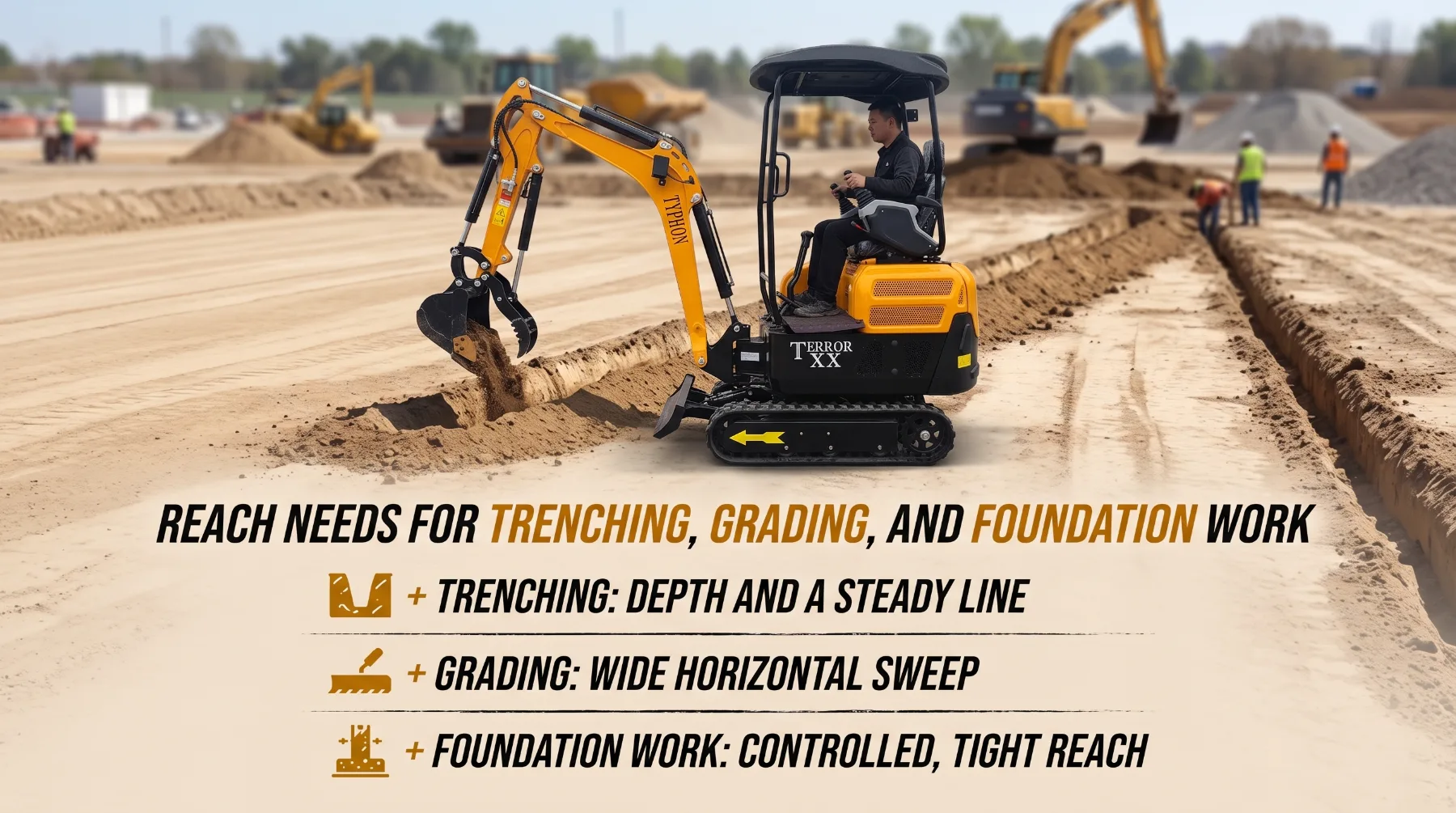
Trenching sets its own demands on arm reach, and they lean heavily toward depth and a steady horizontal line.
Digging a utility or drainage trench means cutting to a consistent depth along a straight path, so an arm with the reach to hold that depth while the machine sits stationary lets the operator carve a long, clean run before moving up.
A longer arm covers more trench per position, which speeds a job measured in linear feet.
Grading
Grading calls on reach in a different way, prioritizing horizontal span and smooth, sweeping control over sheer depth.
Leveling a pad or shaping a slope means drawing the bucket across the surface in long, even passes, so an arm with generous horizontal reach lets the operator grade a wide area from one spot and keep the surface consistent.
The ability to feather the arm through a controlled arc matters here as much as the distance it covers.
Foundation and Footing Work
Foundation and footing work bring the most demanding mix, since these digs often need real depth pressed close to structures the machine cannot drive over.
Cutting footings against an existing wall or excavating a foundation to grade rewards an arm that reaches into tight corners and holds precise depth without forcing the tracks into impossible positions.
What this means: Trenching leans on depth and steady line, grading leans on horizontal span and smooth control, and foundation work demands precise depth in tight spots, so each task asks for a distinct blend of reach.
How Reach Affects Repositioning and Productivity
Repositioning is the hidden cost that reach quietly controls, because every time the operator must crawl the machine to a new spot, the digging stops and the clock keeps running.
An arm with ample reach covers more work from each position, so the machine sits and digs longer between moves, while a short reach on a spread-out job forces constant repositioning that fragments the work.
Fewer repositioning moves can also improve operating safety, reducing the number of times the machine must travel, turn, and work around people or obstacles.
Those small delays and extra movements stack into real time and safety considerations across a shift measured in trenches and pads.
Efficiency over a full day tilts on this balance, since the fewer moves a machine makes, the more of its running hours go toward actual excavation.
A long-arm machine grading a wide lot or trenching a long run finishes with noticeably less shuffling than a short-arm unit tackling the same ground, which shows up directly in how much gets dug before quitting time.
Reach that matches the spread of the work keeps the machine productive rather than perpetually relocating.
Balance tempers the pursuit of pure reach, though, because a longer arm is not automatically the faster choice on every job.
Confined sites, heavy digging, and tasks needing strong breakout force sometimes favor a shorter arm that works efficiently in a tight envelope, where a long arm would only add awkwardness.
Key takeaway: Reach that suits the spread of the work cuts repositioning and lifts productivity, but matching the arm to the job matters more than simply reaching for the longest one.
Choosing the Right Configuration for Your Jobs
Selection starts with an honest look at the work your machine will face most often, because the best arm configuration flows directly from your typical jobs rather than the occasional exception.
A contractor who spends most days trenching long utility runs or grading open lots gains from the extended reach of a long arm, while one working confined sites and dense digging finds the short arm's force and control the better fit.
Naming your common tasks is the first and most useful step.
Trade-offs deserve clear-eyed weighing, since no single configuration wins every contest and pretending otherwise leads to a poor buy.
Choosing the long arm accepts a slight loss of breakout force and a shifted balance in exchange for reach and depth, while choosing the short arm gives up span for power and stability, so the right decision depends on which compromise costs you least across your real workload.
Understanding what each choice surrenders keeps expectations grounded.
Guidance from a knowledgeable equipment source turns that assessment into a confident purchase, because matching arm reach to a machine, a workload, and a budget rewards real experience.
Describing your typical dig depths, site conditions, and task mix to a trusted specialist lets them recommend a configuration built for the results you need rather than a generic best guess.
What this means: Choosing the right arm configuration means matching it honestly to your typical jobs and weighing its trade-offs, so the machine you buy fits the work you actually do.
Conclusion
Arm reach shapes how effectively a mini excavator serves different excavation tasks, and the full picture comes together once you follow each piece in turn.
Start by recognizing why reach defines the working envelope and shapes the comfort, precision, and quality of every dig, then understand how dig depth and horizontal reach describe different halves of the arm's capability and trade against each other in practice.
Weigh short-arm configurations that deliver force and control against long-arm setups that deliver reach and depth, and match those strengths to the distinct demands of trenching, grading, and foundation work.
Account for how the right reach cuts repositioning and lifts productivity, then choose the configuration that fits your typical jobs by weighing its trade-offs honestly.
Attend to all six, and the machine works with the geometry of the job rather than against it, finishing cleaner digs in less time.
Before your next purchase or project, list your common tasks, note your usual dig depths and site conditions, and compare them against the arm's specifications so the machine performs from the first trench.
When you're ready to put a dependable mini excavator matched to your work to work, or need help choosing the right arm configuration for your projects, reach out to a trusted equipment specialist who can match reliable equipment to the results your work depends on.
Frequently Asked Questions
What is the difference between dig depth and horizontal reach?
Dig depth measures how far below the surface the bucket can cut, while horizontal reach measures how far out from the machine the arm can stretch at ground level.
Both matter, but the arm cannot deliver its full depth and full reach at the same moment, since extending far to the side trades away depth and cutting straight down sacrifices distance.
Reading both figures together tells you what the machine can truly accomplish on a given task rather than relying on a single number.
Should I choose a short arm or a long arm for my mini excavator?
It depends on the work you do most.
A short arm delivers greater breakout force, stability, and control in a tighter range, which suits heavy digging, confined sites, and precise work.
A long arm stretches the working envelope farther out and deeper down, which suits long trenches, wide grading, and reaching over obstacles, at the cost of a little digging power.
Match the configuration to your typical jobs rather than assuming longer is always better.
Does a longer arm always mean better productivity?
Not always.
A longer arm covers more work from each position, which cuts repositioning and speeds spread-out jobs like long trenches and wide grading.
But on confined sites or heavy digging that needs strong breakout force, a shorter arm often works more efficiently in a tight envelope where a long arm only adds awkwardness.
Productivity comes from matching the reach to the spread and demands of the work, not simply from choosing the longest arm available.