
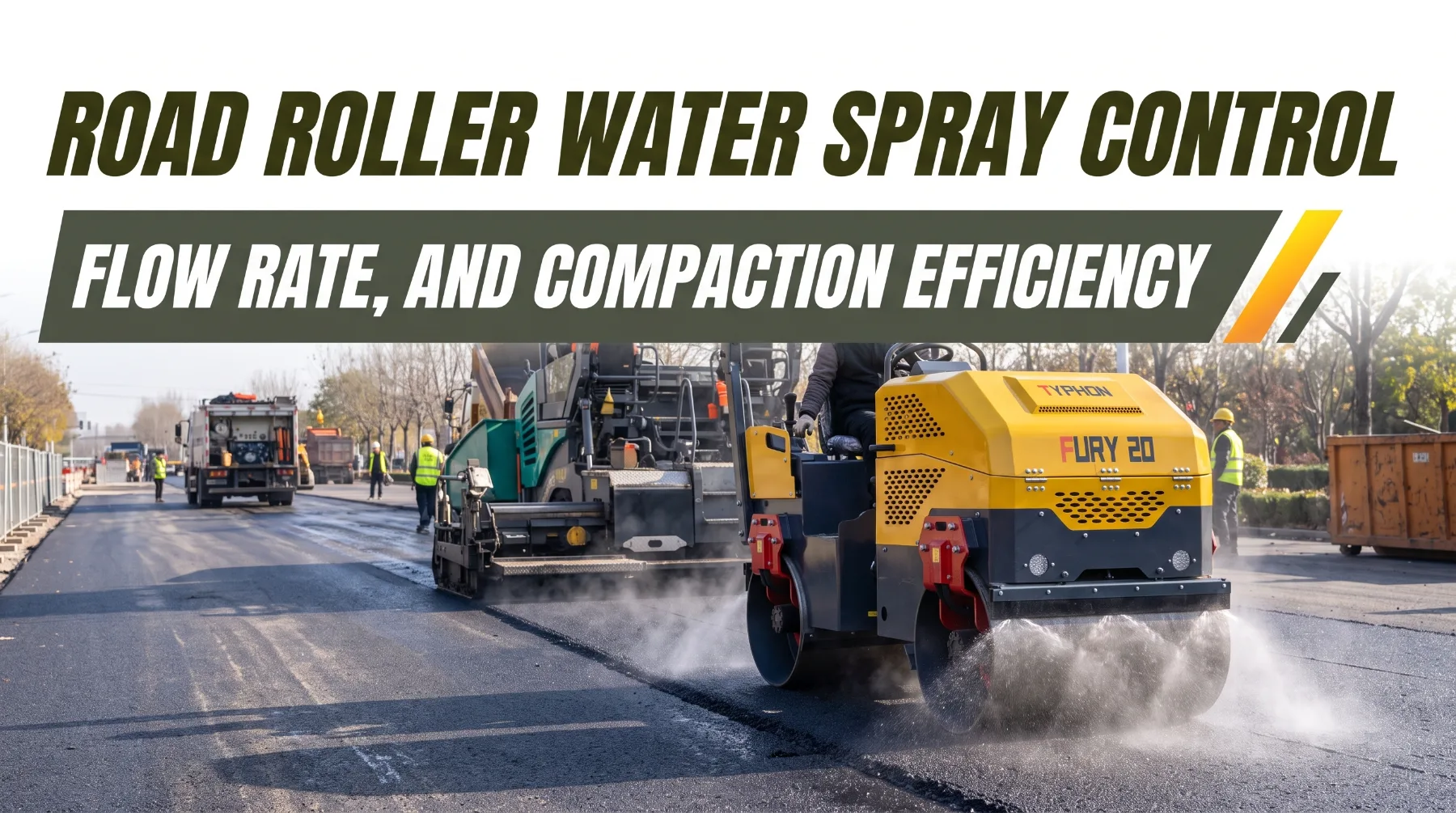
Fresh asphalt demands careful control from the first pass, and a road roller's water spray system plays a major role in that process. As the drum moves across the hot mat, a fine mist coats the steel surface just before contact. Too little water can allow asphalt to stick to the drum, creating marks and pulling material from the surface. Excessive water can create unnecessary moisture, waste tank capacity, and lead to more frequent refilling. Finding the right spray level keeps the drum clean and helps each pass leave a smooth, consistent finish.
Behind that simple spray is a system that must deliver water evenly across the drum surface. Nozzles, pumps, filters, hoses, and water flow all influence how effectively the drum stays free of asphalt buildup. Uneven coverage can leave sections of the drum dry, while restricted nozzles can reduce spray where it is needed most. Proper operation therefore depends on more than keeping the tank filled.
During actual compaction, spray performance needs to match the working conditions. Asphalt temperature, roller speed, ambient heat, and the number of passes can all affect how quickly water evaporates and how much spray is needed. Regularly checking nozzle condition, water flow, filters, and pump operation helps maintain consistent coverage throughout the shift. When the system is properly adjusted and maintained, it supports cleaner drums, steadier passes, and a more uniform finished surface.
Controlling Water During Each Pass
The goal of the spray system is simple: deliver water consistently to the drum as it contacts the asphalt. Steel drums running over hot mix want to pick up asphalt, and a thin film of water on the drum surface is what prevents that from happening. When water reaches the drum evenly through every pass, the surface releases cleanly and the mat stays smooth behind the machine.
Modern rollers give the operator real control over that delivery, whether through adjustable spray settings, timed intervals, or on-demand triggering tied to drum movement. Use those controls to match the water output to the paving conditions in front of you and the manufacturer's requirements for the machine. The aim is consistency across repeated passes, not a heavy soak on one pass and a dry drum on the next. A steady, appropriate film keeps the drum surface in the same condition throughout the compaction sequence, which is exactly what a uniform finish requires.
Key takeaway: Consistent water delivery to the drum on every pass keeps hot asphalt from sticking and supports a smooth, uniform compacted surface.
How Flow Rate Affects Drum Wetting
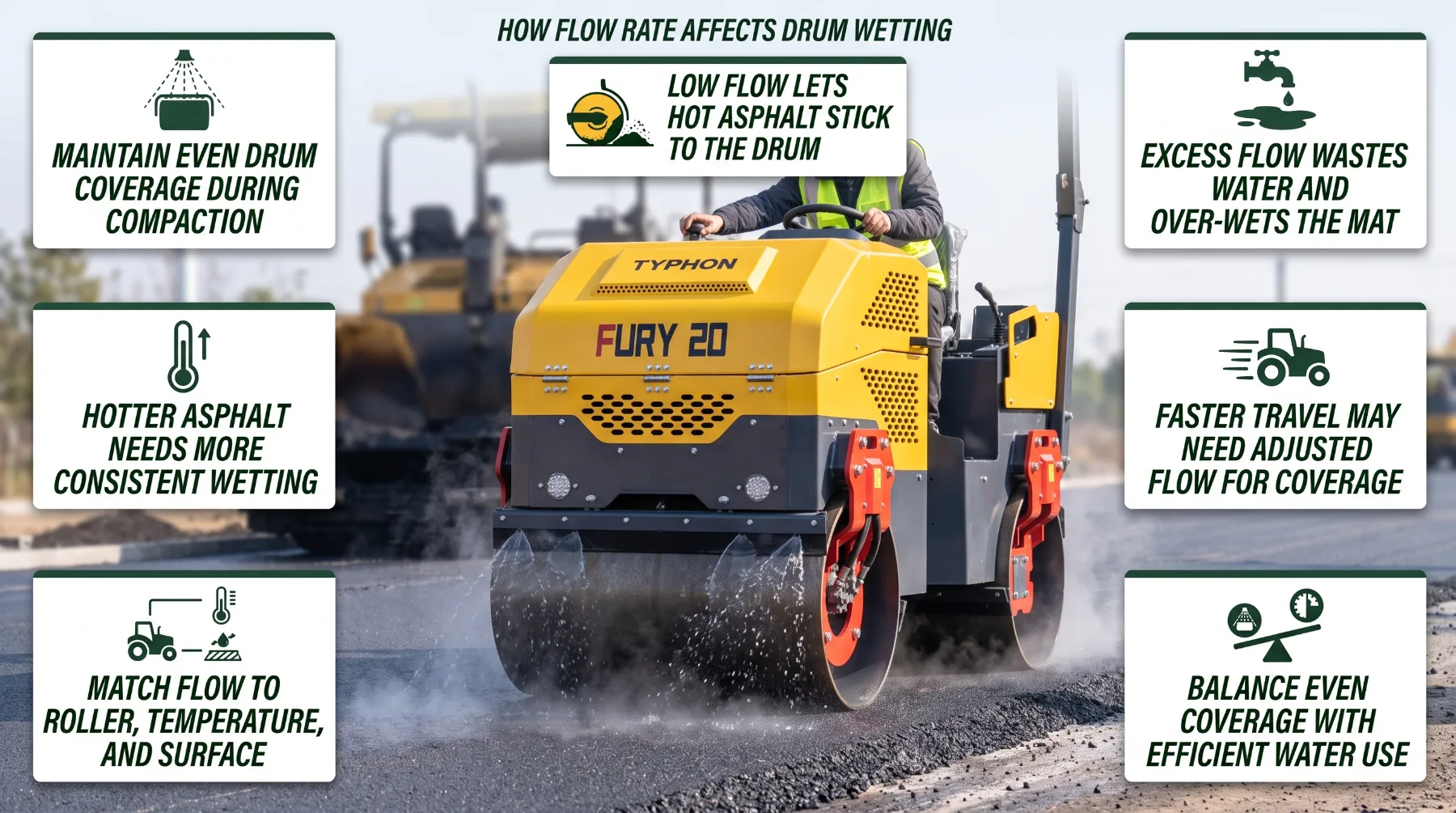
Flow rate determines how much water reaches the spray nozzles over a given period and plays an important role in keeping the drum properly wetted. Too little water can allow hot asphalt to stick to the drum, while too much wastes water and can leave unnecessary moisture across the mat. The appropriate flow depends on the roller, spray system, asphalt temperature, travel speed, and jobsite conditions.
Key takeaway: Flow rate controls how well the drum stays wetted, so set it to keep the full drum surface covered without wasting water, adjusting for asphalt temperature, speed, and conditions.
Nozzle Coverage Across the Drum
Flow rate gets water to the nozzles, but the nozzles decide where that water lands on the drum. Even coverage across the full drum width is what prevents the dry spots where hot asphalt starts sticking. A single blocked or damaged nozzle creates a dry stripe, and that stripe is often where buildup and surface marks first appear. Uniform spray from every nozzle is the foundation of a clean drum.
Blockages and damage are common because the system runs on water that carries dirt, fine particles, and mineral content. Over time, nozzles clog, spray patterns distort, and coverage turns patchy even when the flow rate looks correct. Regular inspection of the nozzles, filters, and spray lines keeps the pattern consistent and catches problems before they mark a mat. Make a habit of checking the spray pattern across the full drum, looking for any nozzle that sprays weakly, unevenly, or not at all, and clear or replace it promptly.
Key takeaway: Even nozzle coverage across the full drum prevents dry spots and asphalt buildup, so inspect nozzles, filters, and spray lines regularly to keep the pattern uniform.
Water Use and Asphalt Temperature
Asphalt's tendency to stick to the drum changes as the mat cools, and your water use should change with it. Fresh mix is hottest and most workable right after placement, and that is when it clings most aggressively to a steel drum. Heavy, consistent water application matters most during those early passes on hot material, because that is where buildup and tearing are most likely.
As the mat cools through the compaction sequence, the asphalt becomes less prone to sticking, and the amount of water needed generally drops. This is why applying a fixed amount of water through every pass is inefficient and, at times, counterproductive. Too much water on a cooling mat adds unnecessary moisture without a corresponding benefit. The better approach is to coordinate spray use with the actual paving conditions, easing water application as the material cools rather than treating every pass the same. Reading the mat and adjusting accordingly keeps the drum clean while conserving water for where it truly matters.
Key takeaway: Hot fresh asphalt sticks most, so use more water on early passes and ease off as the mat cools, coordinating spray with paving conditions instead of a fixed setting.
Roller Speed and Spray Demand
Travel speed and spray demand are tightly linked, because speed changes how much water any section of drum receives during a pass. When the roller moves faster, each part of the drum spends less time within the sprayed zone, which can reduce the effective water coverage even if the flow rate stays the same. Move slower, and each section of drum receives more water over the same stretch of mat. Speed and spray work as a pair, not as independent settings.
This is why spray control should always be considered alongside operating speed rather than in isolation. If you speed up to cover more ground and leave the flow rate unchanged, you may unknowingly under-wet the drum and invite buildup. If you slow down for a tight section without easing the flow, you may over-apply water to that stretch. The practical habit is to think about the two together: whenever your travel speed changes meaningfully, check whether the spray still delivers appropriate drum wetting and adjust as needed. Matching spray to speed keeps drum coverage steady no matter how the pace of the work shifts.
Key takeaway: Roller speed changes how much water each drum section receives, so adjust spray settings whenever travel speed changes to maintain consistent drum wetting.
Maintaining the Water System
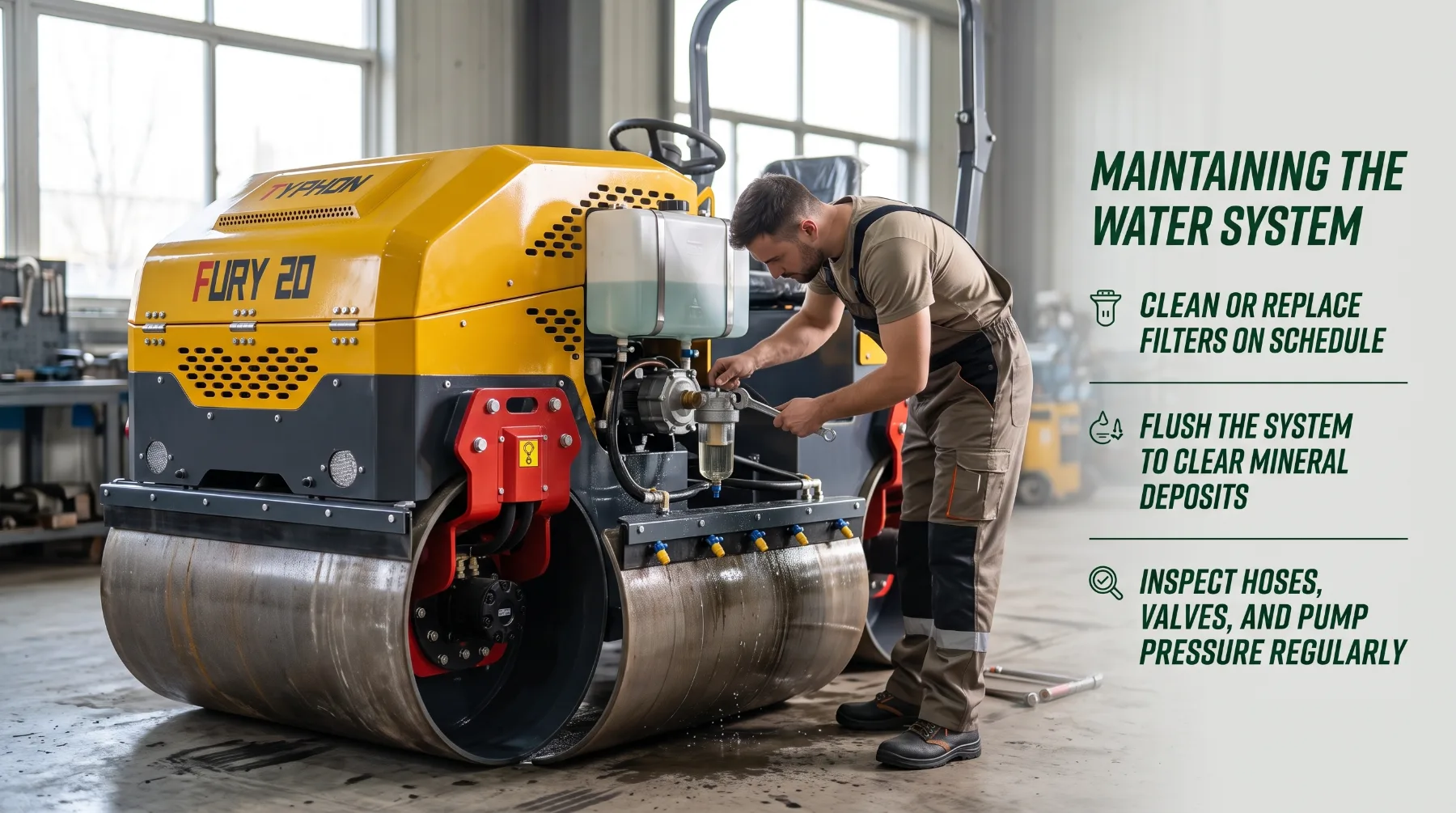
Reliable spray performance depends on the whole system working together: the water tank, pump, filters, hoses, valves, and nozzles. A weakness anywhere in that chain shows up as uneven coverage or a dry drum, so the system deserves routine attention as a unit. Continuous compaction work is demanding, and a spray failure mid-job can force downtime or leave defects in the mat.
Dirt and mineral deposits are the most persistent threats to performance. They accumulate in filters, restrict flow through hoses and valves, and clog nozzles, gradually eroding coverage even when nothing looks obviously broken. Routine maintenance based on the manufacturer's requirements keeps these problems in check: clean or replace filters on schedule, flush the system to clear deposits, inspect hoses and valves for restrictions or leaks, and confirm the pump delivers steady pressure. Using clean water and keeping the tank free of debris reduces buildup at the source. A well-maintained system stays ready for continuous work, which is what asphalt jobs demand.
Key takeaway: The tank, pump, filters, hoses, valves, and nozzles all affect spray reliability, so follow manufacturer maintenance to clear dirt and deposits that restrict flow and cause uneven coverage.
Conclusion
Water spray control supports road roller performance during asphalt compaction by preventing hot material from adhering to the drum and helping maintain a consistent surface finish. The spray system should provide sufficient water to keep the drum surface adequately wetted without excessive consumption, while uniform nozzle coverage prevents localized buildup and uneven cooling. Required flow can vary with asphalt temperature, roller speed, ambient conditions, and the number of passes, so spray settings may need adjustment as the mat cools or travel speed changes. Nozzle condition, filter cleanliness, pump performance, hose condition, valves, and water distribution should be inspected regularly because restrictions or uneven spray patterns can reduce system effectiveness. The water tank and associated components should also be maintained according to manufacturer requirements to prevent contamination and flow problems. Properly matching spray flow and coverage to operating conditions helps prevent asphalt pickup, reduce surface defects caused by drum contamination, and maintain consistent compaction throughout the paving cycle.
Frequently Asked Questions
Why does a road roller need water spray control?
Water spray control helps apply enough water to prevent hot asphalt from sticking to the drum without over-wetting the mat. Too little water can cause asphalt buildup, tearing, and surface defects, while too much wastes water and increases refill stops. Adjusting spray output to asphalt temperature and job conditions helps maintain drum performance and surface quality.
What is the water spray flow rate?
Water spray flow rate is the amount of water delivered through the nozzles over a set period. Too little flow can leave dry areas where asphalt sticks, while excessive flow wastes water and creates unnecessary moisture. The correct rate depends on the roller, spray system, asphalt temperature, travel speed, and site conditions.
Can low water flow affect compaction?
Yes. Insufficient water can allow hot asphalt to stick to dry areas of the drum, reducing consistent contact with the mat. Asphalt buildup can also mark or tear the surface. Operators should watch for sticking or streaking and adjust the spray before buildup affects the finished surface.
How does roller speed affect water use?
Travel speed changes how long each part of the drum remains in the spray zone. Higher speeds reduce water applied per section, while slower speeds increase it. Spray flow and travel speed should therefore be adjusted together to maintain consistent drum wetting without under- or over-applying water.