
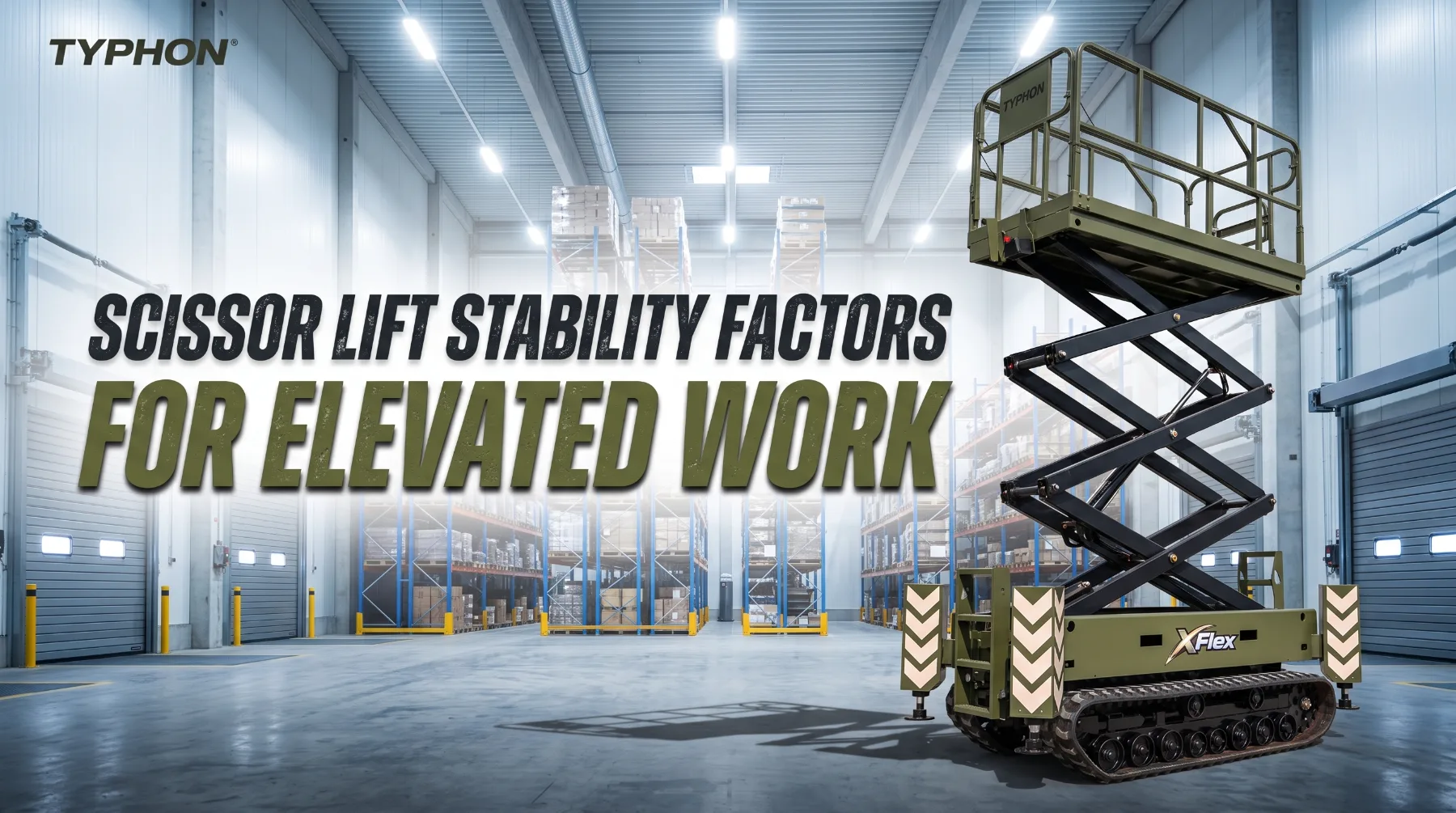
A facilities crew rolls a scissor lift into a distribution center to service a run of ceiling fans twenty feet up, and the job looks routine until the platform starts to climb. The floor near the loading bay slopes just enough to feel it underfoot, a stack of returns sits in the path where the machine needs to sit, and a bay door stands open to a gusting afternoon wind. A rushed operator would set the lift wherever it landed, load the deck with tools, and ride it up without a second thought. The one who knows better parks the machine on the level slab well away from the door, checks the deck load against the rating, sets the brakes, and eases up in smooth stages while the platform holds rock steady the whole way. That difference between a nervous climb and a solid one comes down to stability, and understanding what keeps a scissor lift planted is what separates a safe job from a dangerous one.
Stability is the quality every elevated task depends on, because the same height that makes a scissor lift useful is exactly what turns any weakness into a serious fall or tip. Knowing the factors that hold the machine steady protects the person on the platform, the crew below, and the equipment itself, while keeping the work moving without fear.
Ground Conditions Beneath the Machine
Everything begins with what sits under the wheels, since a scissor lift can only be as stable as the surface it stands on. The machine is built to work on firm, level ground, so soft soil, gravel, potholes, and slopes all threaten the balance the moment the platform rises and the center of gravity climbs. A surface that feels solid enough for walking can still give way or tilt under the concentrated weight of a loaded lift, which is why studying the ground matters before the machine ever moves into position.
Slope is the quiet danger that catches careless operators, because even a gentle grade grows into a real tipping force once the deck reaches height. Confirm the surface sits level within the machine's rated tolerance, avoid parking across an incline, and never bridge a curb, a drain, or an expansion joint with the wheels where the load could shift unevenly. Indoors, watch for floor drains and soft patches that break an otherwise smooth slab.
Support underneath finishes the picture, especially on ground that offers less than perfect footing. Spreading the load across pads or setting the lift on a surface that can carry its full weight keeps the wheels from sinking or shifting, so the base stays true through the whole lift. A scissor lift stays stable only when it sits on firm, level ground with solid support, so judge the surface carefully before you raise the platform.
Load Weight and How It Sits on the Deck
Weight on the platform shapes stability just as powerfully as the ground below, because every pound up top raises the machine's center of gravity and narrows its margin against a tip. Each scissor lift carries a rated capacity that covers the operators, their tools, and the materials combined, so exceeding that limit strains the machine and undermines the balance it was engineered to hold. Knowing the rating and staying comfortably within it is the first rule of loading the deck.
Distribution matters as much as the total amount, since a load piled to one side pulls the whole machine off center. Spread tools and materials evenly across the platform, keep the heaviest items low and centered rather than stacked high or shoved into a corner, and avoid loading the deck in a way that leans its weight toward one edge. A balanced platform holds far steadier than an overloaded or lopsided one carrying the same figure.
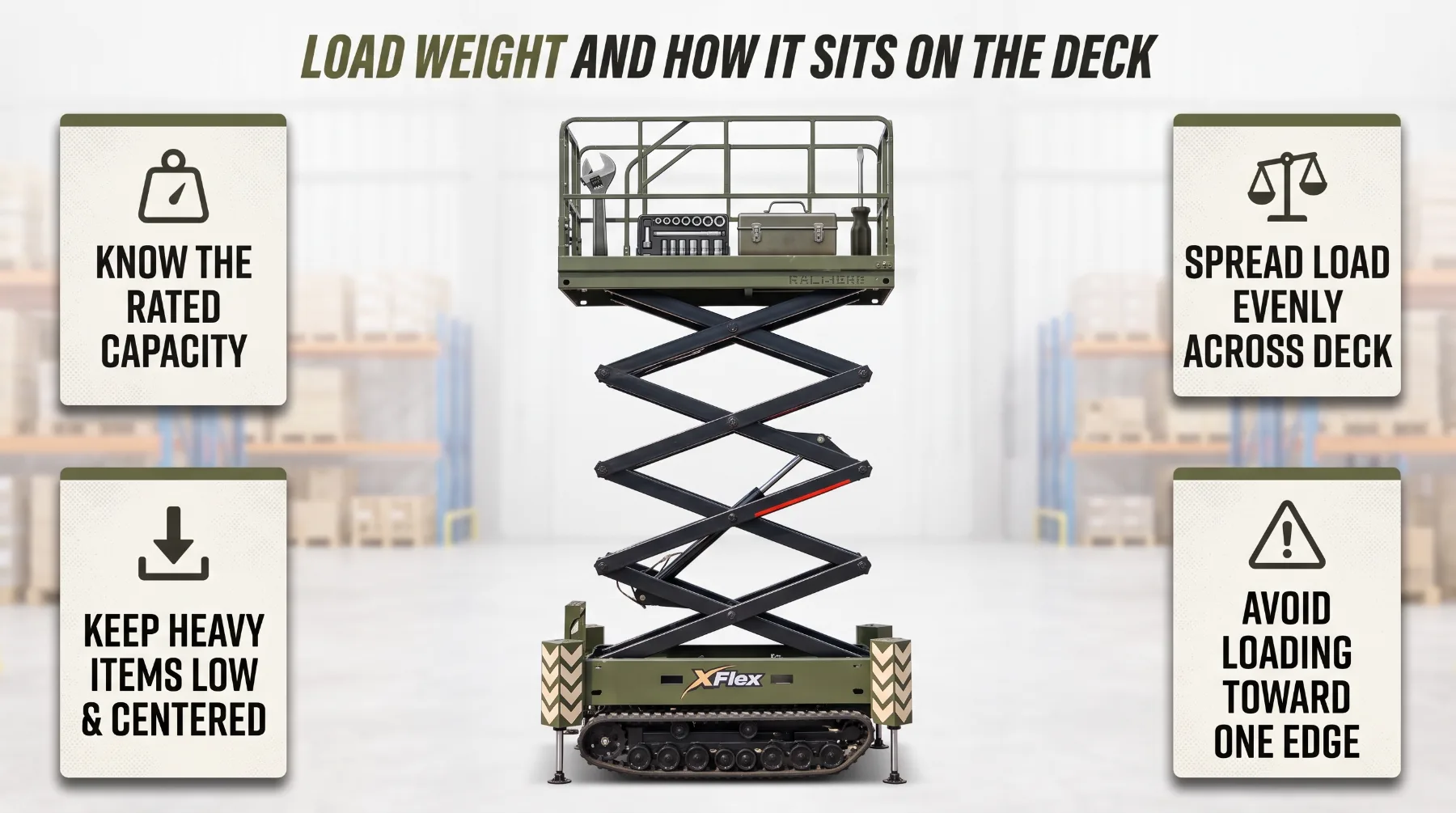
Movement of the load during work deserves the same attention you give the initial setup, because a shifting weight changes the balance mid-task. Secure anything that could roll or slide, resist the urge to add extra material once the platform is raised, and account for the force of the work itself when a task pushes or pulls against the deck. Keeping the load within the rated capacity and spread evenly across the platform protects the balance a stable lift depends on.
Extensions, Outriggers, and the Machine's Footprint
Footprint is the foundation that determines how much tipping force a scissor lift can resist, because a wider, stabler base holds far better than a narrow one at height. Many machines rely on the wheelbase alone, while others add extensions or stabilizers that widen the effective footprint and lock the base firmly in place. Understanding which system your lift uses, and deploying it fully, is what gives the platform its resistance against a lean.
Deploying that hardware correctly is where operators either build stability or throw it away. When a machine provides outriggers or stabilizer legs, extend them fully onto solid ground, level the base with them before raising the platform, and confirm each one bears weight rather than hanging loose. Skipping this step or setting a leg on soft ground leaves the machine standing on a smaller, weaker base than it was designed to use.
Platform extensions call for their own caution, since a slide-out deck shifts weight beyond the stable core of the machine. Extend the deck only as far as the lift permits, keep the load on an extension within its separate lower rating, and retract it before moving the machine so the weight stays over the base. Using the full footprint through properly deployed stabilizers and cautious deck extensions gives the lift the wide, solid base that keeps it upright.
Wind and the Surrounding Environment
Air is the force operators underestimate most, because a breeze that feels harmless at ground level turns into a powerful lever against a raised platform. Wind pushes on the deck, the operators, and any material catching the air, and that pressure grows with height until it threatens to tip a machine that would stand solid in calm conditions. Every scissor lift carries a maximum wind rating for outdoor use, and respecting that limit is not optional.
Judging the conditions before and during the work keeps a gust from becoming a disaster. Check the forecast and the actual wind at the site, watch for the funneling effect near building corners and through open bay doors that concentrates a breeze into something stronger, and bring the platform down when the wind climbs toward the machine's limit. A job delayed for weather beats a machine on its side.
Surroundings beyond the wind shape stability too, and they demand a careful scan of the whole work area. Keep clear of overhead power lines, watch for passing traffic or equipment that could strike the base, and account for anything that might bump the machine or add sudden force while the platform is up. Respecting the wind rating and reading the full environment around the machine keeps outside forces from toppling a raised lift.
Operator Positioning and Movement at Height
People on the platform influence stability more than they often realize, because a body leaning over the rail moves weight to the very edge where balance is weakest. Staying centered on the deck with your feet flat and your weight inside the guardrails keeps the load where the machine expects it, so resist the temptation to lean out, climb the rails, or stretch toward a task just beyond comfortable reach. When the work sits too far away, reposition the entire lift rather than reaching for it.
Motion at height carries risk that the same motion on the ground never would, since sudden shifts rock a raised platform in ways a low one shrugs off. Move deliberately on the deck, avoid quick jerks or forceful actions that push against the guardrails, and remember that any force you apply to the work pushes back on the machine's balance. A calm, measured pace keeps the platform settled through the whole task.
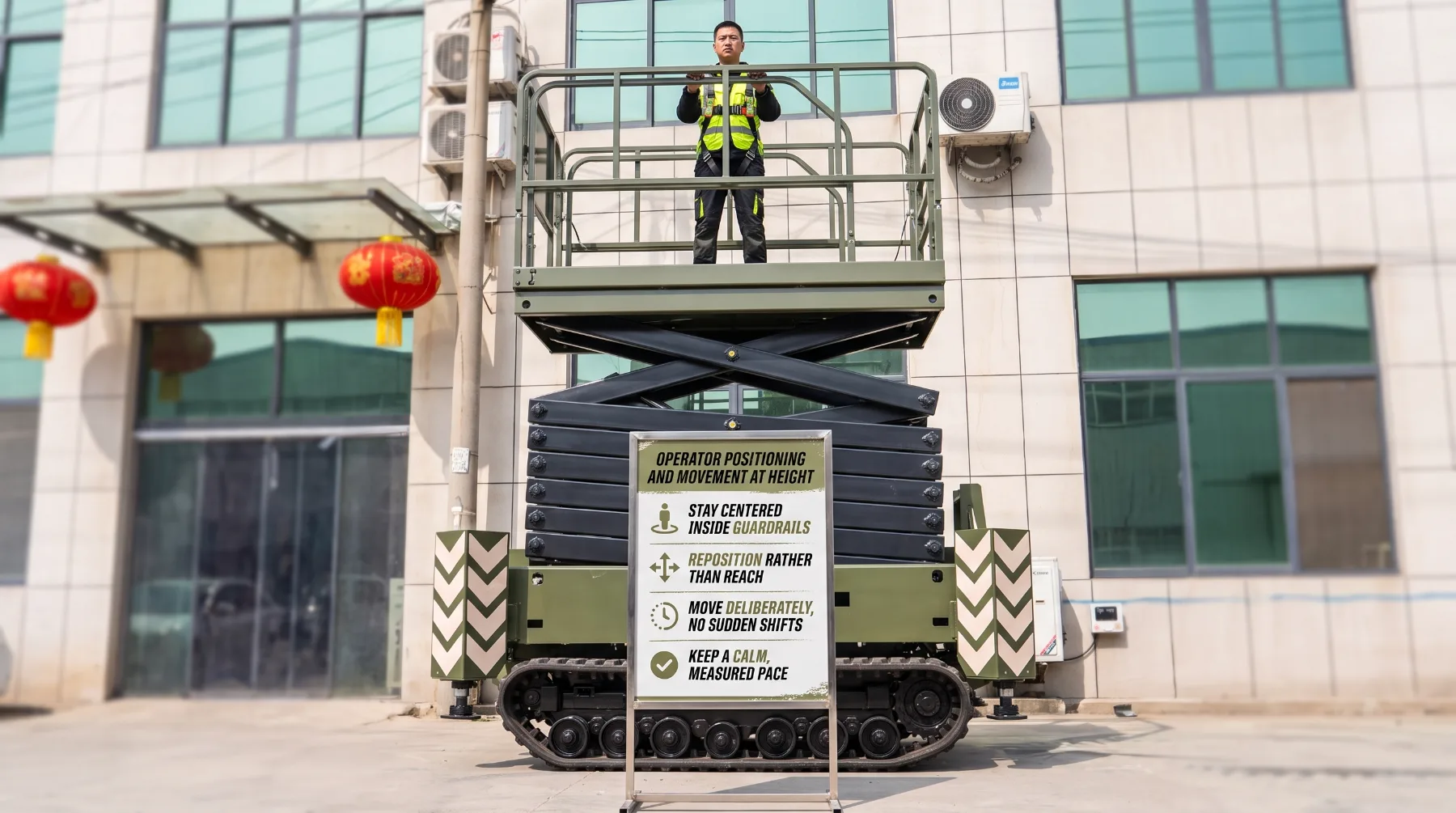
Driving the lift while elevated is the movement that most directly threatens stability, and it deserves the firmest discipline. Lower the platform fully before repositioning on all but the flattest, firmest ground, and when a machine does permit elevated travel, creep at the slowest pace while watching every bump and slope. Staying centered, moving smoothly, and lowering the platform before you travel keep the operator's own actions from unsettling the lift.
Inspection and Mechanical Soundness
Condition of the machine underpins every other stability factor, because a lift with a hidden fault can fail even when the ground, the load, and the wind all cooperate. A worn hydraulic seal, a cracked scissor arm, or a brake that no longer holds firm turns a stable setup into a hazard the instant weight or height tests it. Opening each shift with a thorough inspection is what confirms the machine can deliver the stability its design promises.
Checking the systems that hold the platform steady is the heart of that inspection. Look over the scissor arms and pins for cracks or wear, examine the hydraulic cylinders and lines for leaks that could let the deck drift down, and confirm the fluid sits at its proper level. Test the controls, the emergency stop, and the emergency lowering function while the platform is still low, so any problem shows itself where it stays easy to manage.
Wheels and brakes earn special scrutiny, since they anchor the machine against rolling once the platform climbs. Verify the tires are sound and the brakes hold the lift firmly in place under load, and take any machine with a fault that could compromise its footing out of service until the repair is complete. A careful inspection of the arms, hydraulics, controls, and brakes confirms the machine itself will hold steady, which is the base every other stability factor rests on.
Conclusion
Scissor lift stability during elevated work comes down to a set of factors that reinforce one another, and the whole picture holds together once you address each in turn. Start with firm, level ground and solid support beneath the wheels, then keep the load within the rated capacity and spread evenly across the deck so the center of gravity stays low. Deploy the full footprint through properly set stabilizers and cautious deck extensions, respect the wind rating while reading the surrounding environment, and stay centered on the platform with smooth, deliberate movement that never travels raised on uneven ground. Back all of it with a thorough inspection that confirms the arms, hydraulics, controls, and brakes are sound. Attend to every one of those factors, and the platform stays steady through the whole job rather than testing your luck at height.
Before your next elevated task, check the ground and the forecast, confirm the load against the rating, and run the inspection so the machine performs from the first rise. When you're ready to put a dependable, stable scissor lift to work, or need help matching the right machine to your job, reach out to a trusted equipment specialist who can match reliable equipment to the results your work depends on.
Frequently Asked Questions
What surface does a scissor lift need to stay stable?
Firm, level ground is essential, because the machine can only be as stable as the surface under its wheels. Avoid soft soil, gravel, potholes, and slopes, since these shift or give way once the platform rises and the center of gravity climbs. Confirm the surface sits level within the machine's rated tolerance, never bridge a curb, drain, or expansion joint with the wheels, and use pads to spread the load on ground that offers less than perfect footing. Judging the surface carefully before you raise the platform is the first step to a stable lift.
How does wind affect a raised scissor lift?
Wind grows far stronger against a raised platform than it feels at ground level, pushing on the deck, the operators, and any material that catches the air until it can tip the machine. Every lift carries a maximum wind rating for outdoor use, so check both the forecast and the actual wind at the site, and lower the platform when the wind climbs toward that limit. Watch especially for the funneling effect near building corners and open bay doors, where a mild breeze concentrates into something much stronger. Delaying a job for weather is always safer than risking a tip.
Why does load placement matter as much as load weight?
Because a load piled to one side pulls the whole machine off center, even when the total weight sits within the rating. Every pound on the platform raises the center of gravity, and an uneven load narrows the margin against a tip further still. Spread tools and materials evenly across the deck, keep the heaviest items low and centered rather than stacked high or shoved into a corner, and secure anything that could roll or shift during the work. Keeping the load both within capacity and balanced is what protects the stability a raised lift depends on.