
A skid steer's engine provides the mechanical power needed to drive the hydraulic pump, travel system, and other machine functions, making horsepower, torque, and displacement important factors in overall performance. Horsepower represents the rate at which the engine can produce work, while torque represents its ability to produce rotational force at the crankshaft. Engine displacement describes the total swept volume of the cylinders and can influence how an engine develops torque and horsepower, but displacement alone does not determine output. These characteristics affect how well the engine maintains speed when hydraulic demand, travel resistance, or attachment load increases.
The relationship becomes clearer when the engine is connected to the hydraulic system. The engine drives the hydraulic pump, which converts mechanical input into hydraulic flow and pressure for the loader arms, auxiliary attachments, and other functions. Hydraulic flow primarily affects how quickly cylinders and hydraulic motors operate, while pressure determines the force available when the system encounters resistance. A properly matched engine provides enough torque to maintain pump speed under load and enough horsepower to sustain simultaneous hydraulic, travel, and attachment demands. Engine specifications should therefore be evaluated alongside pump capacity, hydraulic pressure and flow, rated operating capacity, attachment requirements, machine weight, and duty cycle rather than selecting a skid steer based on the largest horsepower or displacement figure alone.
What Horsepower Actually Tells You
Horsepower measures the rate at which the engine can do work, or how much output it delivers over time. On a skid steer, it's the headline figure most buyers notice first, and it gives a rough sense of the machine's overall capability.
But horsepower alone tells an incomplete story. A high number suggests the engine can sustain fast, demanding work, yet it says nothing about how the machine behaves the moment it meets resistance. Two skid steers with matching horsepower can feel very different in the cut, depending on how that power is delivered.
Think of horsepower as the engine's capacity to keep working at pace. It matters most for sustained tasks, such as running a high flow attachment through a long shift or keeping cycle times brisk under continuous demand. Just don't treat it as the single measure of a machine's strength.
What Torque Delivers in the Cut
Torque is the twisting force the engine produces, and it's the spec that matters most when the work turns tough. Where horsepower describes speed of output, torque describes raw pulling and pushing force.
That force is what lets a skid steer crowd its bucket into packed clay, drive an auger through dense soil, or push a stubborn pile without stalling. When a machine bites into hard ground and keeps moving instead of bogging down, you're feeling torque at work.
Pay special attention to how torque behaves at lower engine speeds. A machine that holds strong torque when the going gets hard will power through resistance rather than lugging down and losing momentum. For digging, grading, and heavy pushing, torque is often the truest predictor of how a skid steer performs on your worst material.
What Displacement Means and Why It Matters
Displacement is the total volume the engine's cylinders sweep through in a full cycle, usually measured in liters. It represents the engine's combustion capacity, or how much air and fuel it can burn with each stroke.
That capacity sits underneath both horsepower and torque. A larger displacement generally gives the engine more room to produce strong torque and sustained horsepower, especially the low end grunt that heavy work demands. It's the foundation the other two specs build on.
Displacement also hints at how an engine behaves under continuous load. A larger engine tends to work comfortably within its range rather than straining at its ceiling, which usually means steadier performance and longer life on demanding jobs. Smaller displacement keeps the machine light and fuel efficient, but leaves less reserve when the work stacks up.
How the Three Specs Work Together
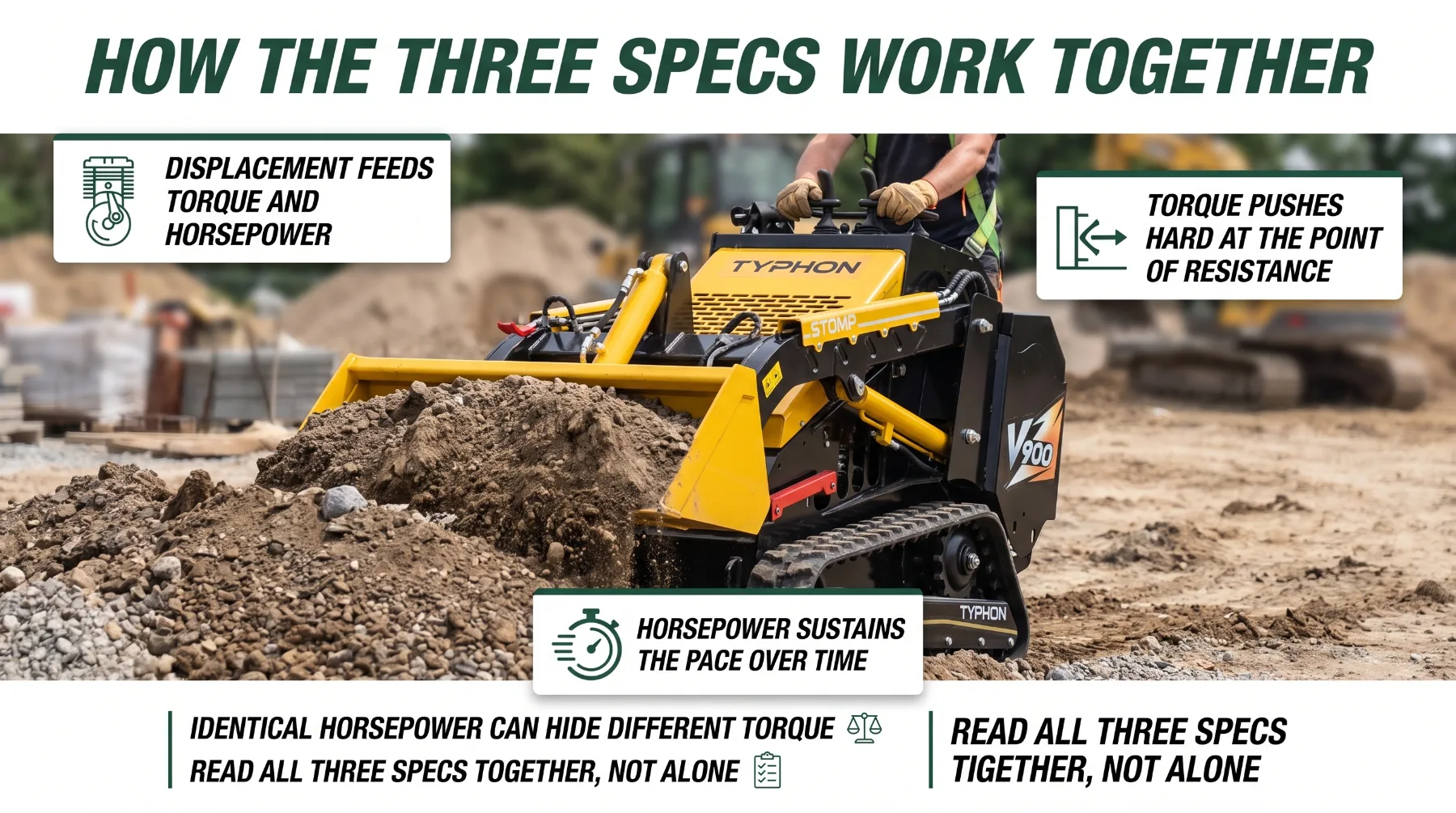
No single number defines a skid steer's engine. Horsepower, torque, and displacement describe different facets of the same powerplant, and they only make sense when read together.
Displacement Feeds Torque and Horsepower
Displacement is the source. A larger swept volume burns more fuel per stroke, which produces the torque that drives force into the ground and the horsepower that sustains it. When you see strong torque and horsepower figures, adequate displacement is usually what makes them possible and repeatable under load.
Torque and Horsepower Describe Different Strengths
Torque tells you how hard the machine can push at the moment of resistance; horsepower tells you how fast it can keep working over time. A machine can post high horsepower yet feel weak in the cut if its torque is thin, or dig with authority yet run out of pace on high flow attachments if its horsepower falls short. The best match balances both for your work.
The Numbers Only Matter in Context
A spec sheet is a starting point, not a verdict. Two engines with identical horsepower can differ sharply in torque delivery and displacement, and that difference decides how each one handles your toughest task. Always read all three figures as a set.
How Engine Specs Shape Hydraulic Performance
Here's the connection buyers most often miss: a skid steer does almost none of its real work through the engine directly. The engine drives a hydraulic pump, and that pump powers the lift arms, tilt cylinders, drive motors, and every attachment you mount.
Engine output determines how much hydraulic flow and pressure the machine can sustain. Flow sets how fast attachments cycle; pressure sets how much force they exert. An engine with strong torque and ample displacement keeps the pump fed even when several functions run at once, so the machine holds its speed and force under combined demand.
This is where attachment capability lives. Power hungry tools like mulchers, cold planers, and trenchers draw heavy, continuous flow, and only an engine with the output to feed them will run them at full effectiveness. Weak specs show up as attachments that slow, hesitate, or stall the moment resistance climbs.
How Specs Translate to Digging Force, Cycle Times, and Attachments
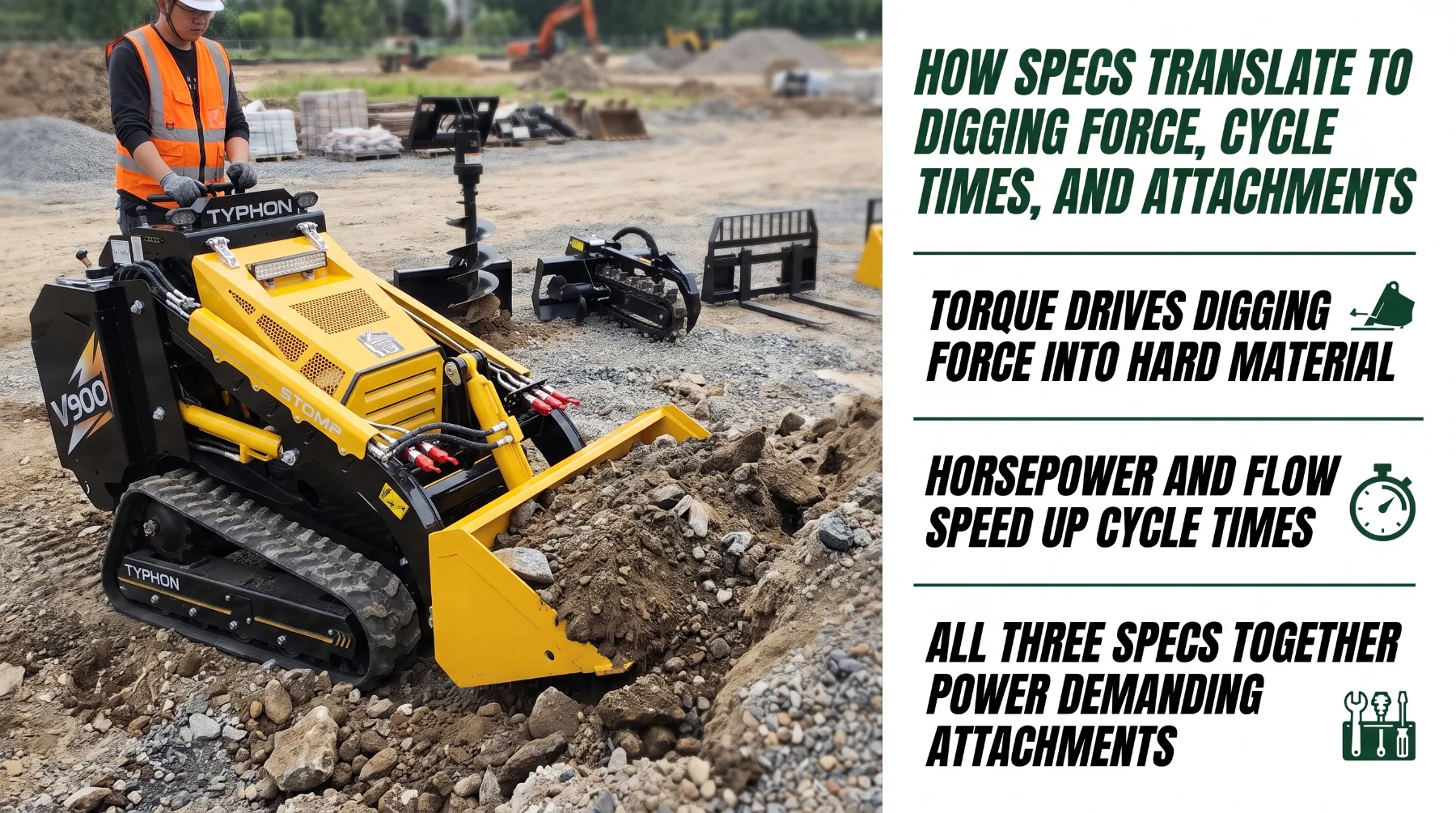
Each spec earns its keep in a specific part of the work. Torque is the star of digging force, because it's what drives the bucket into hard material and holds steady against resistance. When you spec a machine for tough excavation or heavy grading, low end torque deserves your closest attention.
Cycle times lean on horsepower and hydraulic flow together. The faster the pump can move fluid without the engine bogging down, the quicker each lift, curl, and dump completes. Across hundreds of cycles a shift, that speed compounds into real productivity, so horsepower and flow reserve matter most for high throughput loading and carrying.
Attachment capability draws on all three specs at once. Displacement supplies the reserve, torque handles resistance, and horsepower sustains the pace, so a well rounded engine runs demanding tools without faltering. Match the engine to your heaviest attachment, and lighter work takes care of itself.
Conclusion
Horsepower, torque, and engine displacement describe different aspects of a skid steer's powertrain and should be evaluated together when selecting an engine for a specific workload. Engine displacement represents the cylinder volume available for combustion and influences the engine's ability to develop torque and power, while torque determines the rotational force available at the crankshaft under load and horsepower represents the rate at which the engine can deliver mechanical work at a given operating speed. These characteristics determine the mechanical power available to drive the hydraulic pump and drivetrain, but hydraulic flow and pressure are ultimately governed by pump displacement, engine speed, system design, and hydraulic efficiency rather than engine specifications alone.
High-resistance digging and demanding attachments can increase pump pressure and engine torque demand, while high-flow tools such as mulchers, planers, and trenchers can require sustained hydraulic power that places greater continuous load on the engine. An engine with insufficient torque or power reserve may experience speed droop under heavy hydraulic or traction loads, reducing available pump flow and attachment performance, while excessive engine capacity can add unnecessary fuel consumption, cooling requirements, weight, and cost if the hydraulic system cannot utilize the additional output.
Engine selection should therefore consider rated horsepower, torque characteristics, displacement, pump flow, maximum system pressure, operating weight, attachment requirements, material resistance, and duty cycle. Matching these parameters to the heaviest realistic material and most demanding attachment allows the skid steer to maintain stable engine speed, hydraulic output, and drivetrain performance during sustained operation without unnecessary oversizing. Actual operating conditions should also be considered alongside the manufacturer's complete specification sheet because rated engine output alone does not establish the machine's total hydraulic or attachment capability.
Frequently Asked Questions
Is horsepower or torque more important on a skid steer?
It depends on the work, but torque often matters more for the tasks that push a machine hardest. Torque is the force that drives the bucket into packed material and keeps an auger turning through dense ground without stalling, so it's the truer predictor of digging and pushing performance. Horsepower matters most for sustained speed, such as running high flow attachments and keeping cycle times brisk through a long shift. The best machine balances both, so read the two figures together and weigh them against whether your work leans toward heavy force or continuous pace.
Does higher engine displacement always mean a better skid steer?
Not automatically. Larger displacement generally supports stronger torque, sustained horsepower, and more reserve under continuous load, which helps greatly on demanding material and power hungry attachments. But it also burns more fuel and adds weight, so on light loading or landscaping work in tight quarters, a smaller displacement engine can serve better by saving fuel and keeping the machine nimble. The right choice is displacement matched to your real workload, big enough to carry your heaviest realistic task with reserve, without paying for capacity you'll rarely call on.
How do engine specs affect the attachments I can run?
Engine specs decide how much hydraulic flow and pressure the machine can sustain, and that directly sets attachment capability. High flow tools like mulchers, cold planers, and trenchers need continuous flow to keep their motors turning, so they demand an engine with the horsepower and displacement to feed them without bogging down. Simpler attachments like buckets and grapples ask far less. Identify the most demanding attachment you'll run regularly, check its flow and pressure requirements against the machine's output, and make sure the engine carries genuine reserve so the tool performs at full effectiveness under load.