
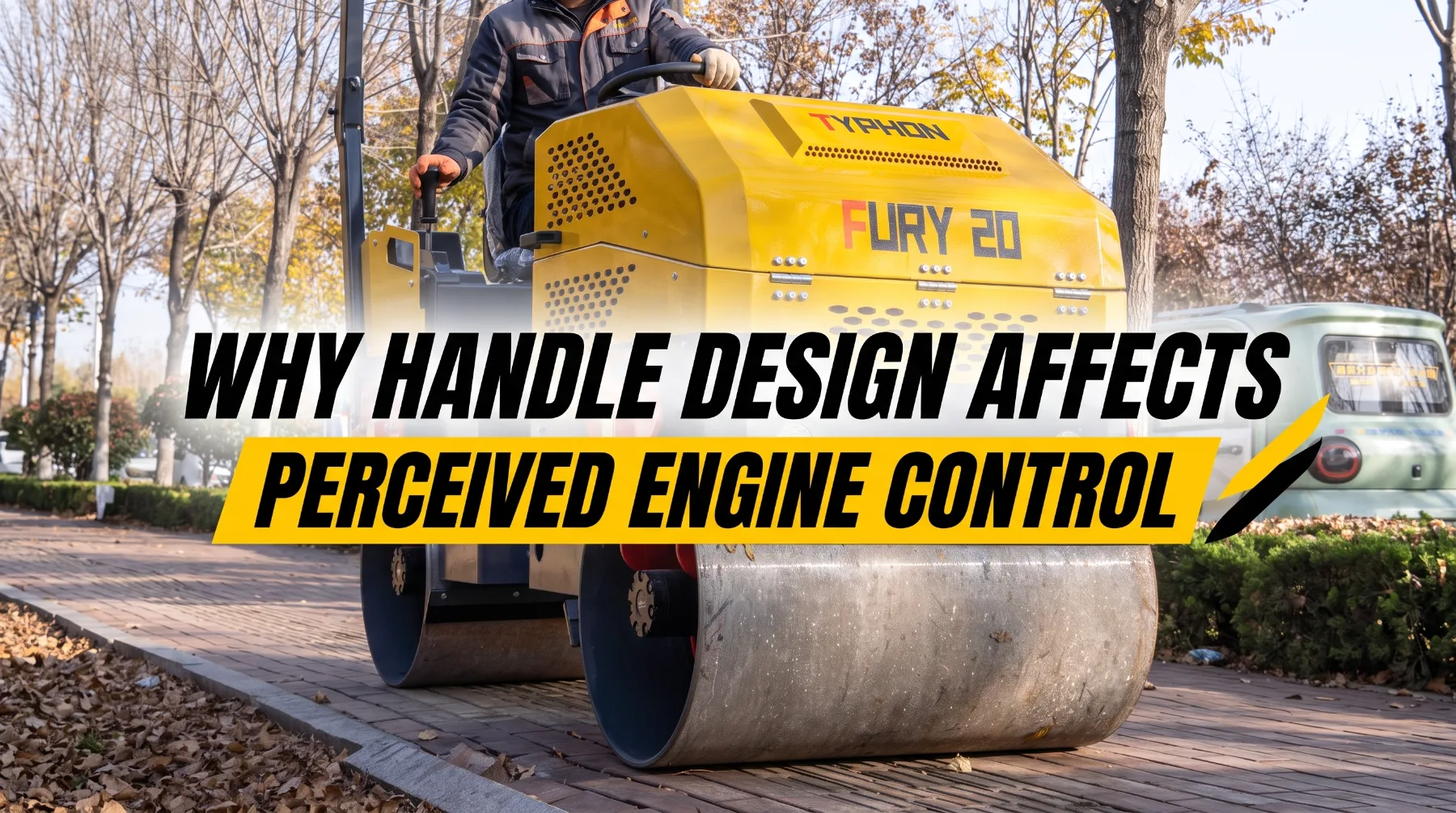
When operators say a road roller “feels alive,” they are often describing more than engine power or compaction force. The handle creates the physical connection between the operator and the machine, influencing how clearly every movement, vibration, and response is felt. A well-designed handle turns mechanical power into precise, predictable control, while a poorly designed one can make even a capable machine feel disconnected and difficult to operate.
That connection becomes especially important over a full workday. Engine output only matters when the operator can translate it into controlled movement and respond naturally to changes in the surface. Handle height, grip position, spacing, and vibration management all contribute to that experience, affecting comfort, confidence, and control from the first pass to the last.
The Handle as a Communication Channel
Picture the handle as a direct line between operator and machine. The roller sends information through it, and the operator sends commands back. When that line is clear, every small shift in engine output registers as immediate and deliberate. When it's cluttered, the same powerplant can feel vague, disconnected, or slower to respond, even when the engine itself is performing exactly as intended. The handle is therefore more than a structure used to steer the roller. It becomes the physical connection through which the operator interprets what the machine is doing and controls what happens next.
Precise handle geometry keeps this exchange sharp. Wrist angle, grip spacing, handle height relative to the seat, and the distance between the operator's body and the controls all influence how naturally those inputs reach the machine. If the handle forces the wrists into an awkward position or requires the operator to stretch forward, even simple steering corrections can become less precise. A well-designed handle keeps the hands in a comfortable working position while allowing the operator to make small adjustments without unnecessary movement. Rollers that get these proportions right give operators the sense of a willing, responsive engine, even when the horsepower specification matches a rival model exactly. The difference comes from how effectively the machine translates engine power into a response the operator can immediately understand and control.
Grip Feedback and Vibration Cues
Your palms are constantly gathering data. Every movement of the drum, every change in ground resistance, and every variation in engine load can create a physical signal that travels through the machine and reaches the operator's hands. Subtle vibration traveling up through the grip can tell an experienced operator whether the drum is compacting evenly, whether the engine is working harder than usual, or whether the ground condition has shifted underneath the roller. These signals may seem insignificant to someone standing beside the machine, but they can become valuable information during continuous operation. The operator gradually learns what normal feels like and can recognize when the machine begins behaving differently.
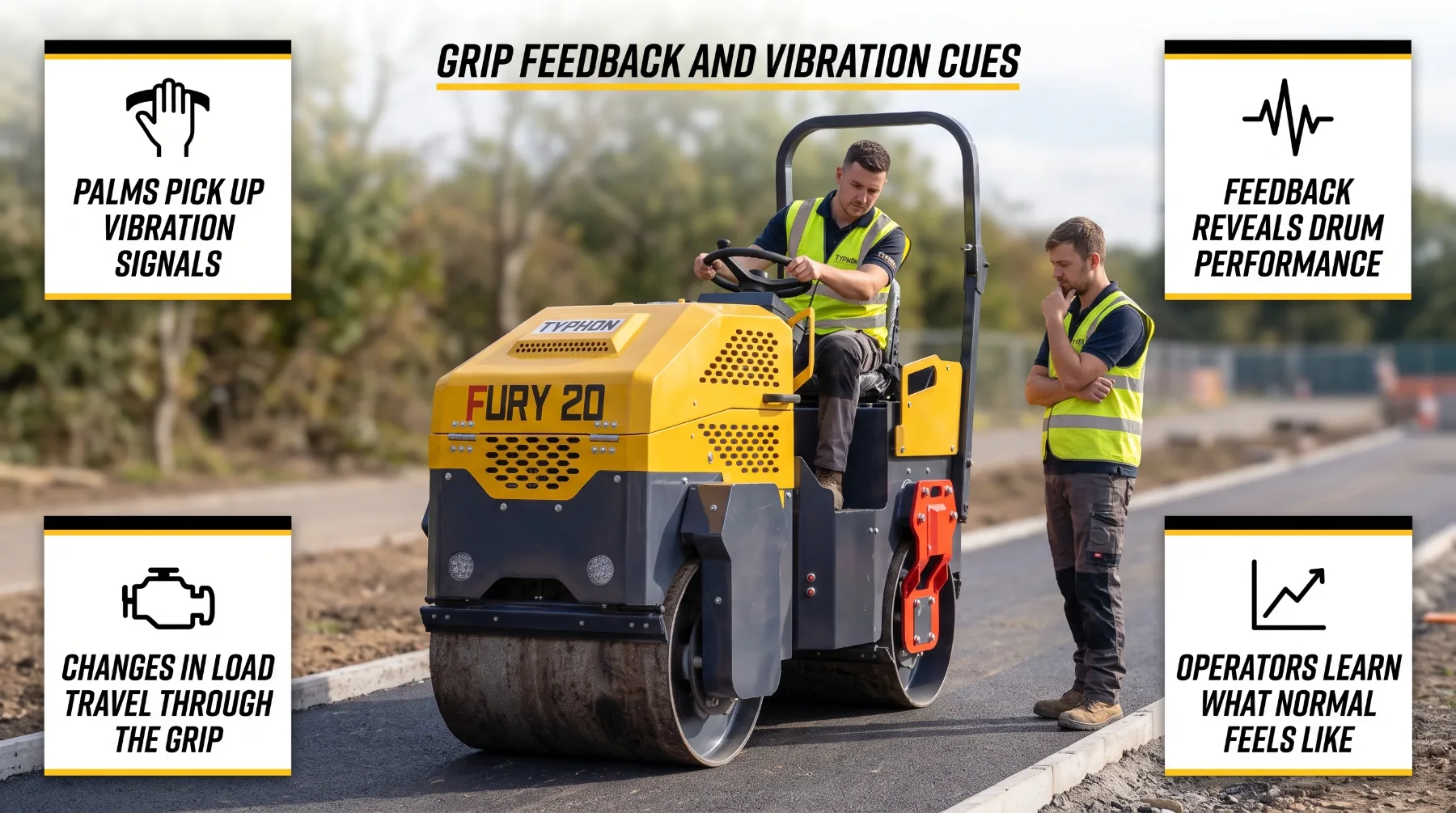
Handle materials, grip thickness, mounting methods, and vibration isolation all determine how much of that signal reaches your hands and how much disappears before it gets there. The goal is not simply to eliminate vibration. Some vibration is useful because it gives the operator a physical indication of what is happening at the drum and on the surface being compacted.
Striking the right balance is therefore critical. Excessive vibration can transfer unnecessary stress into the hands, wrists, arms, and shoulders, leaving an operator tired well before the end of a shift and making precise control more difficult. Too little feedback can create the opposite problem. When every useful signal is isolated away, the machine may feel smooth but disconnected, stripping away the tactile cues that help operators develop confidence in its behavior.
Skilled engineers tune this feedback intentionally rather than treating every vibration as something that should simply be removed. Harsh, repetitive frequencies can be reduced to make long operating periods more comfortable, while useful changes in machine behavior can remain noticeable through the grip. This balance becomes especially important when the roller is working across different materials or changing surface conditions. An experienced operator can often sense that something has changed before the difference is obvious visually. In that sense, the handle becomes an information system, giving the operator another way to understand the engine, drum, and ground without constantly looking away from the work area.
Lever Placement and the Sense of Immediacy
Where the throttle and directional levers sit in relation to the main grip determines how quickly an operator can respond. A control that sits within easy thumb or finger reach allows the operator to change engine output, adjust travel, or alter direction without releasing the main grip or changing posture. That small ergonomic advantage can have a surprisingly large effect during repetitive work. When every control movement follows a natural hand motion, the operator does not have to think about the control itself. Attention stays on the surface, the travel path, and the compaction task instead of being divided between the machine and the controls.
An awkward control layout creates the opposite experience. If a lever is too far away, positioned at an uncomfortable angle, or difficult to distinguish by touch, the operator may need to reach, look down, or reposition a hand before making an adjustment. Each interruption introduces a small amount of hesitation into the operating sequence. Over hundreds of movements during a working day, those small interruptions become noticeable fatigue. More importantly, the operator may interpret the machine as slower or less responsive because the command did not happen at the moment they intended it to happen.
This is why the sense of engine responsiveness is not determined by the engine alone. A powerplant can react immediately to a throttle input, but if the operator needs an extra second to reach the control, the overall experience still feels delayed. Smart lever placement removes that unnecessary gap. Controls positioned close to the natural grip allow the operator to make adjustments almost instinctively, creating a smoother relationship between intention and machine response. The result is a roller that feels easier to predict because every command follows a simple and repeatable physical movement.
Good control placement also becomes more valuable as operating conditions change. A roller may need frequent speed or directional adjustments when working around edges, narrow areas, slopes, or obstacles. The operator should not have to fight the control layout every time the working situation changes. When the levers are properly positioned, the machine can respond to those changes with minimal effort. Over a full shift, that reduction in unnecessary movement can make the roller feel significantly more manageable, even though the underlying engine and hydraulic components may be no different from those found on another model.
Ergonomics and Sustained Confidence
Operator confidence isn't forged in the opening minutes of a shift. It builds steadily through hours of comfortable, uninterrupted control. A handle shaped to reduce wrist strain, sized to accommodate different operators, and surfaced to remain secure in heat, dust, or rain gives the operator a more stable connection with the machine. Small details such as grip diameter, handle angle, control spacing, and the amount of force required to operate a lever may not appear important when inspecting a roller for a few minutes, but their importance becomes much clearer after several hours of continuous work.
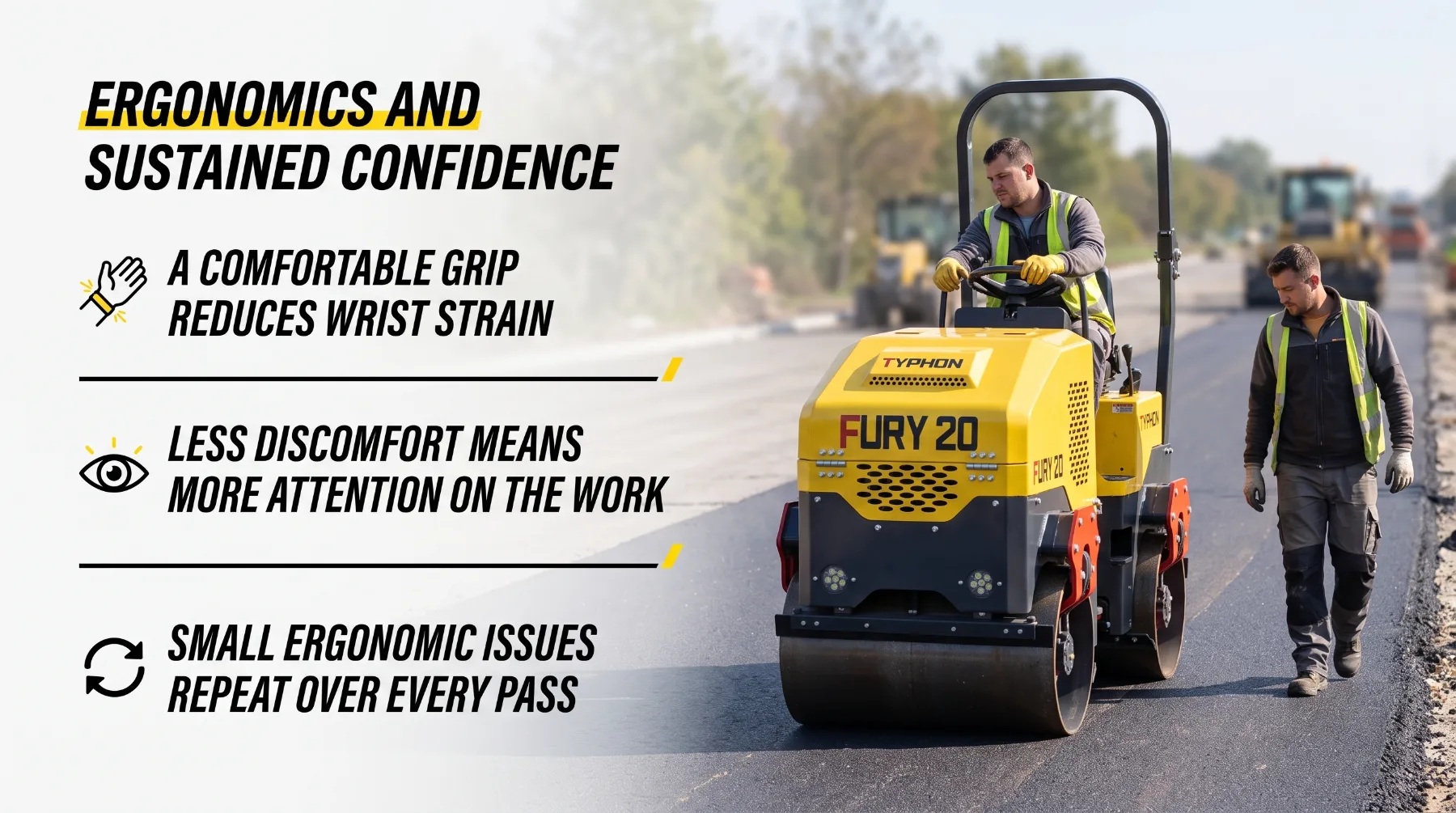
A comfortable operator is also a more attentive operator. When the hands, wrists, shoulders, and back are not constantly fighting an awkward control position, more attention can remain focused on the actual compaction work. The operator can monitor the travel path, observe the material, listen to the engine, and recognize changes in machine behavior without being distracted by physical discomfort. This matters because compaction often involves repeated passes over the same area, meaning small ergonomic problems are repeated again and again rather than occurring only once.
Physical fatigue can gradually corrupt perception. As grip strength wanes and tension builds through the shoulders, an operator loses some of the fine-tuned awareness that made the engine feel manageable earlier in the day. Controls that felt precise in the morning may begin to feel harder to use, and vibration that seemed acceptable at the beginning of the shift can become increasingly irritating. The machine has not necessarily changed, but the person controlling it has become more fatigued. Ergonomic handle design helps slow this decline by reducing unnecessary physical effort and keeping the operator in a more natural working position.
This sustained comfort also contributes to confidence. When the operator knows exactly how the roller will react to a small movement, there is less need to overcorrect or make large control inputs. The machine begins to feel predictable rather than demanding. That predictability is particularly valuable during long shifts, where consistency matters just as much as raw engine output. A well-designed handle helps preserve that sharp, in-command feeling from the morning's first compaction run through the final meters of the shift.
Conclusion
Handle design may not be the first thing buyers compare, but it strongly shapes how a roller feels to operate. While engine power, drum size, weight, and compaction force provide useful numbers, the handle turns those specifications into real operating experience through its grip, controls, vibration feedback, and ergonomics. A well-designed handle makes the roller feel responsive, predictable, and easier to control while reducing unnecessary hand and wrist strain, especially during long shifts. Before relying only on a spec sheet, grip the handle and operate the machine to see how naturally the controls fit your hands, how much vibration reaches you, and how quickly the roller responds to small inputs. These details may be difficult to measure, but they can make a major difference in comfort and control over years of use.
Frequently Asked Questions
Does handle design affect operator safety?
Yes, a well-designed handle reduces fatigue and keeps operators alert, which directly lowers the risk of control errors. Secure grip surfaces and intuitive lever placement also cut the chance of accidental inputs during critical maneuvers.
Can a good handle make a lower-horsepower roller feel more capable?
It can make it feel more controllable, which is often what matters most on site. Clear vibration feedback and responsive lever placement create the impression of a machine that's working with you rather than against you.
What handle materials offer the best feedback without causing fatigue?
Composite rubber and textured polymer grips tend to strike the best balance, dampening sharp vibrations while still passing along meaningful tactile cues. The mounting method matters just as much as the material itself.